The discussion, organised by the Power and Participation Research Centre (PPRC) yesterday (18 April), focused on policy and management challenges behind the outbreak. It was moderated by PPRC Executive Chairman Hossain Zillur Rahman and brought together public health experts to assess systemic shortcomings and propose solutions.
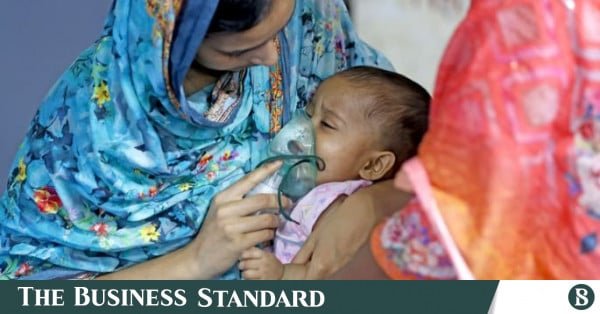
A woman nebulises a child undergoing treatment for measles at a hospital. Photo: TBS
“>

A woman nebulises a child undergoing treatment for measles at a hospital. Photo: TBS
A recent policy dialogue has highlighted concerns over the resurgence of measles in Bangladesh, pointing to gaps in policy, financing, coordination and healthcare delivery despite adequate vaccine availability.
The discussion, organised by the Power and Participation Research Centre (PPRC) yesterday (18 April), focused on policy and management challenges behind the outbreak. It was moderated by PPRC Executive Chairman Hossain Zillur Rahman and brought together public health experts to assess systemic shortcomings and propose solutions.
Vaccinologist and public health specialist Dr Tajul Islam Bari traced the issue to policy and financing constraints. He said significant funds had been allocated for vaccine procurement for the July 2025–June 2026 period, including government resources and support from an Asian Development Bank-backed COVID-19 vaccine facility.

Although approvals for joint procurement with UNICEF were in place, delays in file clearance stalled implementation. He noted that while vaccines were sufficiently available, inefficiencies in distribution management and failures in last-mile delivery prevented them from reaching service points effectively.
Highlighting the clinical situation, Dr Syeda Humaida Hasan of Chittagong Medical College Hospital reported a sharp rise in measles cases. Between April 1 and April 18, the hospital recorded over 226 suspected cases, mostly among children from low-income, malnourished families living in overcrowded conditions.
She said many patients were either unvaccinated or partially immunised, indicating an urgent need for a nationwide measles-rubella vaccination campaign. She also pointed to a marked increase in severe cases compared to previous years.
Dr Md Aminul Hasan, Founder and CEO of Quality Care Concern, linked the outbreak to broader disruptions in the immunisation system. He said the closure of a long-standing sector programme in June 2024 without a proper transition plan created significant gaps in service delivery. The shift to a project-based approach exposed weaknesses in procurement, supply chains and overall service delivery. He added that delays in transitioning from UNICEF-supported procurement to government-managed systems further exacerbated supply constraints due to procedural and approval bottlenecks.
Dr Mohsin Zillur Karim of Aamra Community Hospital pointed to growing panic among parents, which has affected healthcare-seeking behaviour and clinical management.
He said fear-driven responses have in some cases led to delayed diagnosis, over-treatment and inappropriate care, contributing to avoidable complications. He stressed the importance of strengthening community awareness and ensuring coordinated local-level action.
Concluding the session, Hossain Zillur Rahman said addressing the current outbreak must remain the immediate priority while also recognising deeper systemic failures in ensuring primary healthcare as a fundamental right.
He emphasised strengthening routine immunisation and expanding awareness at both community and family levels through coordinated efforts involving social organisations and development partners.
He called for a “creative resilience” approach to public health challenges, noting institutional gaps where vaccine availability did not translate into effective delivery due to the absence of a proper transition plan.
He also underscored the need for rigorous supply chain analysis, strengthening primary healthcare as a constitutional right, and prioritising routine immunisation as a key public health focus for long-term resilience.
About The Author