Soybean oil also gets costlier putting extra pressure on consumers.
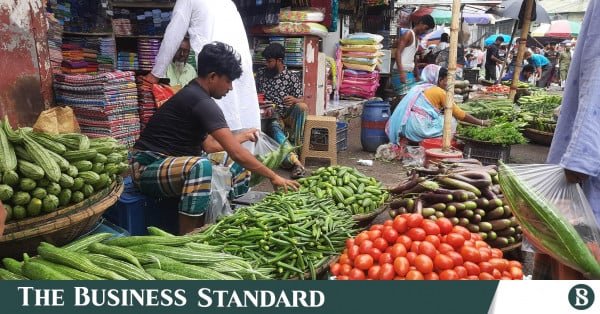
A vegetable vendor is seen attending to his products at a kitchen market in the capital. Photo: Jahir Rayhan
“>

A vegetable vendor is seen attending to his products at a kitchen market in the capital. Photo: Jahir Rayhan
Highlights:
- Higher transport costs, seasonal shortages blamed for price hikes
- Weak market monitoring, arbitrary pricing by traders also blamed
- Soybean oil shortage persists despite govt directives to keep supply normal
- Poultry prices fall, beef remains expensive
Vegetable prices in the capital have surged beyond Tk100 per kilogram for most items, driven by higher transport costs, seasonal transitions and reduced supply.
At the same time, a persistent soybean oil shortage has intensified the pressure on consumers already struggling with rising living expenses.

A visit to key kitchen markets, including New Market, Lalbagh, and Hatirpool, today (17 April) revealed that prices remained elevated across the board.
Traders and buyers said the trend has continued for at least two weeks, with little visible market monitoring.
Pointed gourd was selling at Tk100 per kg, teasel gourd at Tk160, and eggplant between Tk100 and Tk140. Ridge gourd, sponge gourd, bitter gourd, cucumber, and yardlong beans were all priced around Tk100, while snake gourd was slightly lower at Tk80.
Some vegetables were relatively cheaper as radish, tomato, and okra priced at Tk60 per kg; bottle gourd at Tk60-Tk70 per piece; sweet pumpkin at Tk50 per kg; green bananas at Tk40 per four; and taro stolon at Tk80. Still, most items remained expensive for average households.
Monirul Islam, a private sector employee shopping in Hatirpool, said nearly all vegetables were now selling at Tk100 per kg or close to it.
“Everything feels overpriced,” he said, adding that prices have remained high for weeks due to weak market monitoring by authorities concerned, which allowed traders to charge arbitrarily.
Vendors, however, blamed supply constraints.
Tarek, a vegetable vendor, said several items were out of season, pushing prices up at the wholesale level. “Until new crops arrived, prices would stay high.”
The edible oil market has added to consumer hardship. Despite government instructions to ensure supply, soybean oil remained scarce in many grocery shops. In numerous stores, the edible oil was not displayed openly, and unfamiliar customers were often told it was out of stock.
In some cases, oil was sold with conditions, such as requiring customers to buy additional items like salt along with a bottle of soybean oil. This practice further increased consumer frustration.
Ishaq Mia, a Lalbagh resident, said he visited multiple shops without finding oil and eventually purchased a five-litre bottle from a familiar store at Tk955 after waiting.
Similar experiences were reported in New Market and Hatirpool. Some buyers have turned to mustard oil as an alternative due to the shortage.
Earlier, the commerce ministry rejected a proposal to increase soybean oil prices by Tk12 per litre and instead instructed traders to boost supply. However, the directive has yet to show visible results in the market.
Amid rising vegetable and oil prices, poultry offers limited relief. Broiler chicken is selling at Tk180-Tk190 per kg, while Sonali chicken has dropped to Tk380-Tk400 per kg from Tk450. Eggs cost Tk115-Tk120 per dozen.
Beef prices remain high after Eid, holding at Tk850 per kg, with slight bargaining possible in some shops.
About The Author