In addition to higher costs, flight disruptions have also prolonged delivery times due to a significant capacity crunch
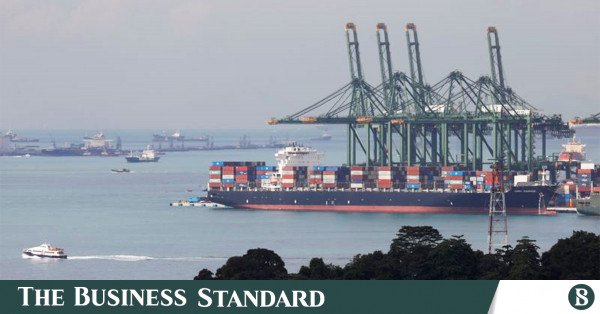
A container ship docks at Pasir Panjang terminal in Singapore November 17, 2020. REUTERS/Edgar Su
“>

A container ship docks at Pasir Panjang terminal in Singapore November 17, 2020. REUTERS/Edgar Su
The ongoing Middle East crisis has sharply reduced air cargo export capacity, pushing freight rates to double and in some cases nearly triple over the past two weeks.
In addition to higher costs, flight disruptions have also prolonged delivery times due to a significant capacity crunch, according to industry insiders.
Before the conflict began, airlines charged around $2 to $2.2 per kg for shipments to European destinations. Those rates have now surged to $5.5 to $6 per kg as demand rises amid limited cargo space, according to data from the International Air Express Association of Bangladesh (IAEAB).

Freight rates to the United States have also increased, rising from about $4.50-$5 per kg to roughly $7-$8 per kg, the data shows.
IAEAB President Kabir Ahmed told TBS that cargo operations have dropped significantly due to flight disruptions.
“Normally, around 600-700 tonnes of cargo were handled daily. Now it has fallen to about 300-350 tonnes per day. Previously it took two to three days to move cargo, but now it is taking six to seven days. As a result, cargo is piling up at the airport, creating space constraints,” he said.
He added that the high freight rates and capacity shortages may persist for at least the next two weeks. “However, if the conflict prolongs, the impact could become even more severe,” he warned.
Typically, about 60% of Bangladesh’s air cargo is shipped through Middle Eastern hubs like Dubai and Doha. However, nearly half of the flights to those destinations remain suspended, according to data from the Civil Aviation Authority of Bangladesh (CAAB), leading to reduced cargo export capacity.
Airport sources said flight disruptions on Middle East routes started on 28 February and the total number of cancelled flights had reached 447 as of 13 March.
Major carriers such as Emirates, Etihad, Flydubai, Air Arabia, Qatar Airways, Gulf Air and Saudia Airlines – all based in the Middle East – have suspended many of their flights for days.
Biman Bangladesh Airlines, the national flag carrier that transports a significant portion of cargo, also suspended flights to several Middle Eastern destinations after the conflict began, further worsening the capacity shortage.
Since Bangladesh has no direct flights to the United States or Europe, it is heavily dependent on these transit hubs.
Meanwhile, airlines operating routes to the US and Europe that bypass the Middle East – including Turkish Airlines, Malaysia Airlines, Thai Airways, Cathay Pacific and Singapore Airlines – have raised their freight charges.
Europe accounts for about 56% of Bangladesh’s air cargo exports, while roughly 22% goes to the United States.
Nasir Ahmed Khan, a former director of the Bangladesh Freight Forwarders Association, told TBS that the country largely relies on passenger flights to carry cargo.
“Most of our cargo moves through passenger carriers. Dedicated freighter services have also been reduced. Now only one scheduled freighter flight arrives per week. Some non-scheduled freighters are operating, but the numbers are not sufficient,” he said.
Bangladesh’s exports have already been in negative territory for seven consecutive months, weighed down by weak demand in the United States and the European Union. The Iran conflict now threatens to add further pressure.
Arab countries accounted for nearly $900 million of Bangladesh’s exports in FY25, representing around 2% of the country’s total exports. However, they remain important markets for certain sectors.
More than 60% of these exports are garments, while the rest mainly consist of vegetables and other agro-products.
Any prolonged disruption in the region could therefore affect both industrial exports and shipments of perishable goods from Bangladesh.
About The Author