The initiative goes beyond raising awareness, seeking to equip students with practical skills to identify, eliminate, and monitor Aedes breeding sites.
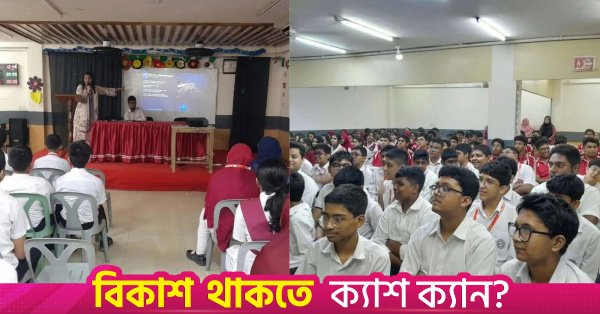
Students take the lead in dengue prevention as DPFB launches its Dengue Ambassador Initiative at Academia School in Dhaka on Sunday (8 November 2026). Photo: Collected
“>

Students take the lead in dengue prevention as DPFB launches its Dengue Ambassador Initiative at Academia School in Dhaka on Sunday (8 November 2026). Photo: Collected
A new initiative aims to engage students in dengue prevention by training them to identify and eliminate Aedes mosquito breeding sites in schools, homes and surrounding areas.
The Dengue Prevention Foundation Bangladesh (DPFB) has launched the “Dengue Ambassador Initiative” to train students in mosquito control and regular monitoring, with the aim of extending prevention efforts from schools to families and communities.
The programme’s first event was held at Academia School in the capital today (8 November) under the theme “Empowering Students to Build Dengue-Safe Communities”.

The initiative goes beyond raising awareness, seeking to equip students with practical skills to identify, eliminate and monitor Aedes breeding sites.
Trained students will inspect their schools, homes and nearby areas for potential breeding grounds. They will also encourage family members and neighbours to clean these places and remove stagnant water.
Students will receive training on the Aedes mosquito’s life cycle, dengue transmission and methods of identifying breeding sites. They will also learn how to remove stagnant water effectively.
The training will cover common breeding spots such as flower pots, discarded containers, old tyres and rooftops, as well as less visible places where water can accumulate.
Where water cannot be removed, students will be guided on the safe and proper use of approved larvicides under the supervision of school authorities.
The programme will also evaluate prevention efforts using scientific methods. Students will map breeding sites, identify high-risk areas and maintain regular monitoring records.
Under expert supervision, they will use recognised indicators such as the House Index, Container Index and Breteau Index to track changes in mosquito breeding patterns.
The initiative will also encourage students to explore new technologies and innovative monitoring methods, allowing them to develop mosquito control ideas suited to local conditions.
The programme will follow three key principles: awareness, prevention and personal protection. Its activities will focus on eliminating breeding sites, preventing mosquito bites, using appropriate mosquito repellents and regularly monitoring the surrounding environment.
DPFB plans to gradually establish dengue ambassador teams in educational institutions across the country, involving teachers, parents, local communities and relevant organisations.
The goal is to develop a sustainable, school-based system for dengue monitoring and prevention.
DPFB General Secretary and physician Masud Khan said seasonal mosquito control campaigns alone were insufficient to contain dengue.
He stressed the need to eliminate Aedes breeding sites, ensure regular scientific monitoring and encourage active public participation.
He expressed hope that the student-led initiative would eventually grow into an effective nationwide social movement against dengue.
“Dengue prevention should begin in schools and spread to every family and community,” he said, adding that public awareness and participation were essential to protecting public health.
About The Author