According to the Ministry of Fisheries and Livestock, hilsa production peaked at a record 5.71 lakh tonnes in FY23 before declining to 5.29 lakh tonnes in FY24 and 5 lakh tonnes in FY25.
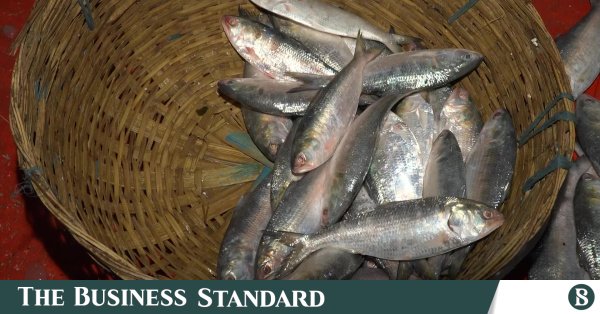
File photo of a basket loaded with hilsa fish caught during the 22-day nationwide fishing ban (8–29 October 2026). Fisheries officials cite limited personnel, budget constraints, and aggressive resistance from fishermen as key challenges in curbing the practice. Photo: TBS
“>

File photo of a basket loaded with hilsa fish caught during the 22-day nationwide fishing ban (8–29 October 2026). Fisheries officials cite limited personnel, budget constraints, and aggressive resistance from fishermen as key challenges in curbing the practice. Photo: TBS
Bangladesh’s hilsa production has declined for the third consecutive year amid growing threats from river pollution, declining navigability, climate change and possible obstructions along migration routes, which could disrupt the fish’s movement between the sea and rivers and its breeding cycle.
Production fell to 4.20 lakh tonnes in the fiscal 2025-26 from 5 lakh tonnes in the previous year, marking the third consecutive annual decline.
According to the Ministry of Fisheries and Livestock, hilsa production peaked at a record 5.71 lakh tonnes in FY23 before declining to 5.29 lakh tonnes in FY24 and 5 lakh tonnes in FY25. With the latest fall, production has declined for three consecutive years, dropping by about 1.51 lakh tonnes, or 26%, from its peak.

Changes in river geography where waterways meet the sea may be disrupting hilsa migration. Tayfa Ahmed, principal scientific officer at the Bangladesh Fisheries Research Institute’s (BFRI) River Centre in Chandpur, said researchers had identified several submerged shoals in the estuary towards Bhola. These may be altering migration routes and making it harder for hilsa to enter rivers.
Zakir Hossain, assistant professor at Sher-e-Bangla Agricultural University, also expressed concern over declining river navigability.
He said pollution was degrading river ecosystems while increasing siltation and shallowing were potentially forcing hilsa to change their migration routes. Natural disasters over the past two years may also have contributed to the decline, he added.
Hilsa’s life cycle depends on the environmental conditions of rivers, estuaries and the sea. Understanding how changes in these habitats affect its migration and breeding is therefore crucial to identifying the causes of falling production.
Infographic: TBS
“>

Infographic: TBS
Concerns over river pollution and rising temperatures
Deteriorating aquatic habitats are another possible factor behind the decline. Md Monirul Islam, a professor in the Department of Fisheries at the University of Dhaka, said illegal fishing and climate change were threatening hilsa production.
Rising water temperatures and river pollution in recent years were also disrupting aquatic ecosystems, he said.
He added that changes in water pH, making it more acidic, could affect fish growth and reproduction, disrupting egg production and hatching.
The professor stressed the need for proper industrial waste management and strict enforcement of environmental regulations, saying effective pollution control was essential amid continued industrial expansion.
Causes of decline under investigation
Researchers are collecting field data to identify the reasons behind the production decline. David Rintu Das, principal scientific officer and head of BFRI’s Planning and Evaluation Division, said researchers were gathering river data during the fishing ban period.
They would analyse the findings to determine the causes and investigate whether new obstructions had emerged along hilsa migration routes, he said.
Tayfa Ahmed said research was also continuing to sustain hilsa breeding and production. The 22-day ban on fishing to protect brood hilsa remains in place on researchers’ recommendations, she added.
Three consecutive years of declining production following the record harvest have raised concerns about hilsa stocks, breeding grounds and migration routes. Stakeholders say seasonal fishing bans alone cannot ensure sustainable production, stressing the need to protect rivers and estuaries, curb illegal fishing and strengthen research-based fisheries management.
About The Author