Non-AC buses will operate exclusively on four routes, while the other two will have both AC and non-AC buses.
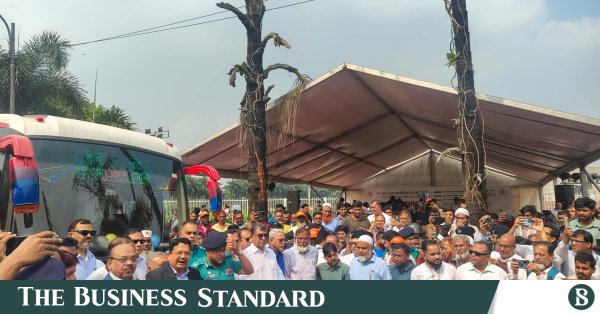
Shamsur Rahman Shimul Biswas, the Pabna-5 MP and chief coordinator of the Transport Owners-Workers Unity Council, inaugurated Company-operated bus services at Manik Mia Avenue around 11am today (1 November). Photo: TBS
“>

Shamsur Rahman Shimul Biswas, the Pabna-5 MP and chief coordinator of the Transport Owners-Workers Unity Council, inaugurated Company-operated bus services at Manik Mia Avenue around 11am today (1 November). Photo: TBS
Company-operated bus services have started on six routes in Dhaka city under the government’s bus route rationalisation initiative, with 780 buses set to operate initially.
The service was inaugurated at Manik Mia Avenue around 11am today (1 November). Non-AC buses will operate exclusively on four routes, while the other two will have both AC and non-AC buses.
The Dhaka Transport Coordination Authority (DTCA) is implementing the initiative. However, instead of introducing new buses, authorities have repainted existing ones and assigned them to six companies.

This has raised questions over whether the initiative can achieve its core goals of bringing discipline to public transport and improving passenger services.
Inaugurating the service, Shamsur Rahman Shimul Biswas, the Pabna-5 MP and chief coordinator of the Transport Owners-Workers Unity Council, said coordinated efforts by transport owners, workers, police, and the media were needed to tackle traffic congestion and disorder in the capital’s transport sector.
Unity and mutual understanding among the four groups could help bring discipline to the roads, he said, adding that establishing discipline in Dhaka’s transport sector would also have a positive impact across the country.
Shimul said disorder in the transport sector benefited only a small group, while the majority stood to gain from discipline. He praised Prime Minister Tarique Rahman’s initiative and urged all stakeholders to help implement the government’s plan.
Saiful Alam, secretary general of the Bangladesh Road Transport Owners Association, said passengers would have to board and get off at designated stops. He urged passengers and transport workers to follow the new system and rules.
Seeking policy support from the government to procure new buses, he said transport owners were not seeking subsidies. If the government helps arrange buses, owners will be able to acquire them through down payments backed by guarantees from the owners’ association, and gradually phase out old buses themselves.
Buses assigned to the six routes
Under the DTCA plan, VIP Paribahan Bus Company will operate 253 non-AC buses on the 26.47km route from Gazipur’s Shibbari to Dhakeshwari Temple in Dhaka. The company has long operated on this route, where an earlier attempt to introduce pink buses under the interim government failed to achieve its goal of restoring discipline.
Chiriakhana City Bus Company will operate 133 buses on the Mirpur Zoo-Keraniganj route, while Ramzan Ali Enterprise will run 70 buses on the route from Keraniganj’s Ghatar Char to Demra. Both companies already operate buses in Dhaka.
Four Star Bus Line will run 150 buses on the Ghatar Char-Kanchpur route, while PNP City Service will operate 190 buses on the Ghatar Char-Uttara route. Another 20 AC buses have been planned for the Tongi-Dhakeshwari Temple route.
Several operators, including VIP, Bikash, Dishari, Tanzil, Metro Link, Ramzan Ali Enterprise, Rajanigandha, Malancha, Shomoy, Midline, Paristhan, and Projapoti Paribahan, already run buses on some of these routes.
However, questions remain over how authorities will prevent buses operated by companies outside the designated six from running on the routes.
About The Author