According to this account, the earthquake triggered landslides along both banks of the Sangu River, sending large quantities of rock into the riverbed. Similar geological upheaval was also reported in the Arakan region.
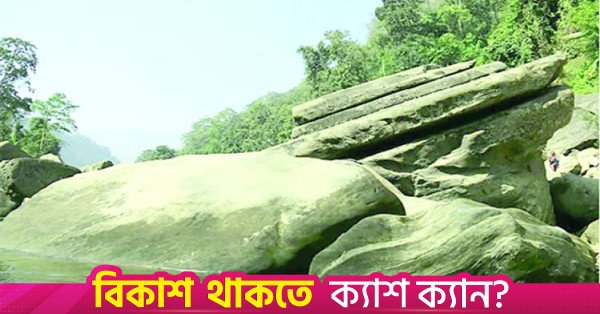
Bongdo, known as the King of Stones, stands in the Sangu River in Tindu, Bandarban. Photo: BSS
“>

Bongdo, known as the King of Stones, stands in the Sangu River in Tindu, Bandarban. Photo: BSS
Nestled amid the rugged hills of Bandarban, where the Sangu River winds through lush mountains and massive boulders dot its riverbed, Bongdo stands out as a remarkable natural landmark steeped in folklore, spiritual beliefs and indigenous cultural heritage.
Locally known as the King of Stones, the imposing rock stands out among the countless boulders in the Sangu River. It is situated in Tindu, about 12 kilometres from Thanchi upazila headquarters.
Its distinctive crown-like summit, together with legends passed down through generations, has made it a place of special significance to local communities and an attraction for visitors exploring the upper Sangu River.

For many indigenous residents, Bongdo is more than a geological formation. It is a symbol of faith and reverence, with some people lighting candles and incense and offering prayers for blessings and protection from natural disasters, illness and hardship.
According to local folklore, a spiritual ascetic once attained divine knowledge and learned of a hidden treasure beneath the Sangu River. In search of it, he is said to have travelled from Arakan, crossing the Kaladan River before reaching the remote hills of present-day Thanchi.
Legend has it that the ascetic meditated on top of a massive rock and, upon leaving, accidentally left behind his turban or crown. Local people believe the distinctive shape at the summit of Bongdo resembles the forgotten headwear.
The name Bongdo is also linked to this legend. According to a commonly shared local explanation, “Bong” in Marma refers to a turban or crown, while “Do” denotes the highest or kingly position. The name is thus associated with the idea of a crowned king among the stones.
Another prominent rock nearby, known locally as Kya: Pajjah, is regarded by many residents as the Stone of the Deity. Together, the two formations are part of the area’s rich cultural and spiritual heritage, sustained through stories passed down from generation to generation.
Local narratives also link the rocky landscape of the Sangu River to a powerful earthquake believed to have struck the region on 2 April 1762.
Marma-language writer and researcher Mongkyashowenu Navy has referred to the earthquake, reportedly occurring in the evening around 5pm, as measuring 8.8 on the Richter scale and lasting about four minutes, accompanied by 15 powerful explosive sounds.
According to this account, the earthquake triggered landslides along both banks of the Sangu River, sending large quantities of rock into the riverbed. Similar geological upheaval was also reported in the Arakan region.
The seasonal changes in the Sangu River add to Bongdo’s appeal. During the monsoon, rising water levels and strong currents often submerge most of the rock, making it difficult to distinguish from the surrounding riverbed.
As the monsoon recedes, the water level falls, and the massive boulder gradually reappears. In shallower water, visitors can observe its distinctive shape against the backdrop of clear water, towering hills and scattered rocks.
The contrast between the flowing river and the imposing stone creates a striking landscape. Sunlight filtering through the water illuminates the submerged rocks, while the surrounding hills add to the area’s natural beauty.
The setting offers nature lovers and photographers an opportunity to explore the scenic upper reaches of the Sangu River and experience the distinctive landscape of the Chittagong Hill Tracts.
Local residents said hundreds of tourists visit Bongdo during favourable seasons to see the rock and explore the surrounding area.
Bhagya Chandra Tripura, chairman of Tindu Union Parishad, told BSS that Bongdo, also known as the King of Stones, had a history spanning hundreds of years and was held in high regard by local people.
He urged tourists to treat the stone with respect and recognise its cultural and spiritual significance to the community.
Bongdo represents an important intersection of natural landscape, indigenous beliefs and local tradition. Its distinctive form and associated legends have given the rock a place in the cultural identity of communities living along the Sangu River.
As the river rises and falls with the seasons, Bongdo remains a prominent landmark in the hills of Bandarban, preserving a legacy of folklore and spiritual reverence that continues to attract visitors to the region.
About The Author