He alleged that fisheries officials might visit once a day but rarely monitored the river afterwards.
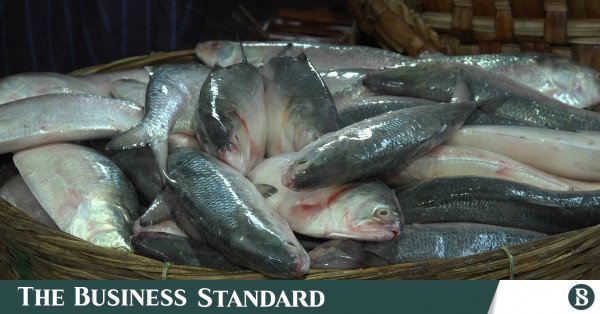
A bamboo basket filled with freshly caught hilsa fish on display at a local market in Barishal. Despite a 22-day government ban to protect spawning mother hilsa, illegal fishing and sales continue across several riverine upazilas in the district. Photo: TBS
“>

A bamboo basket filled with freshly caught hilsa fish on display at a local market in Barishal. Despite a 22-day government ban to protect spawning mother hilsa, illegal fishing and sales continue across several riverine upazilas in the district. Photo: TBS
Illegal hilsa fishing and sales are continuing across several riverine upazilas of Barishal despite a fishing ban that is currently in effect, with locals alleging inadequate enforcement and fishermen claiming protection from local political leaders.
At Char Gopalpur Bazar in Mehendiganj Upazila, Ibrahim Pyada was selling hilsa he bought from fishermen who caught the fish in the Meghna early in the morning. He expressed uncertainty about how they managed to go fishing during the ban but suspected they had connections to law enforcers.
After collecting the fishermen’s phone numbers, the TBS correspondent contacted a man who identified himself as Jamal Munshi. He said he had gone fishing for two nights with the help of a local union-level political leader, who would handle any problems with police and the administration. He declined to name the leader over the phone.


Munshi claimed fisheries officers rarely visited the area and that fishermen faced few problems if they could manage local leaders. He said many people in Ulania, Kaliganj, Aliganj, and Ektar Hat were also fishing during the ban.
Locals said illegal fishing and sales were widespread in the river-adjacent upazilas of Barishal, while enforcement operations remained limited.
At Mirganj Ferry Ghat in Babuganj, local resident Yunus Mia was returning to his home in Muladi with a pair of hilsa he had bought. He said hundreds of fishermen were catching fish despite the ban and questioned why buyers should be blamed when the fish were readily available.
A fish vendor sitting beside a pile of hilsa fish at a market in Barishal. Locals and buyers allege that inadequate monitoring and enforcement by authorities have allowed illegal fishing and trading to persist openly. Photo: TBS
“>

A fish vendor sitting beside a pile of hilsa fish at a market in Barishal. Locals and buyers allege that inadequate monitoring and enforcement by authorities have allowed illegal fishing and trading to persist openly. Photo: TBS
He alleged that fisheries officials might visit once a day but rarely monitored the river afterwards.
Another trader, Abdus Salam, said fishing and buying continued discreetly and claimed the authorities could stop the practice within 24 hours if they genuinely wanted to.
Illegal hilsa fishing was also reported in the Babuganj, Muladi, Hizla, Mehendiganj, Wazirpur, Banaripara, and Bakerganj areas.
Monir Hossain, a resident of Karnakathi in Barishal Sadar, said he bought hilsa directly from fishermen on the bank of the Karkhana River in Bakerganj.
He paid Tk1,500 for a one-kilogram fish, Tk1,000 per kg for fish weighing 600-800 grams, and Tk500 per kg for smaller fish. He spent Tk3,000 in total.
Mehendiganj Upazila Nirbahi Officer Md Riazur Rahman said he had heard that fish were sold in local markets early in the morning. He said operations were difficult at night because of rough river conditions and the time needed to cross from one bank to another.
“We are trying, but we are still unable to stop illegal fishing,” he said, adding that local political leaders had been asked to intervene, but no results were visible.
Mehendiganj Fisheries Officer Mahfuzur Rahman said fishermen had become aggressive when officials went to the river to conduct operations. He added that the Bangladesh Coast Guard had been forced to fire blank shots after facing attacks.
Barishal District Fisheries Officer Md Hadiuzzaman said only four fisheries officers were assigned to guard the region’s largest fish sanctuary, which stretches 318 kilometres across Hizla and Mehendiganj.
He said navigating the river became difficult after sunset and that the department had almost no budget for operations this year, resulting in fewer drives than before.
The department believes illegal hilsa sales are taking place in numerous markets across Barishal district, mostly in Hizla and Mehendiganj, he added.
A basket loaded with hilsa fish caught during the 22-day nationwide fishing ban (8–29 October 2026). Fisheries officials cite limited personnel, budget constraints, and aggressive resistance from fishermen as key challenges in curbing the practice. Photo: TBS
“>

A basket loaded with hilsa fish caught during the 22-day nationwide fishing ban (8–29 October 2026). Fisheries officials cite limited personnel, budget constraints, and aggressive resistance from fishermen as key challenges in curbing the practice. Photo: TBS
The district’s Deputy Commissioner Mohammad Mamun Khandaker acknowledged violations in some areas, saying the authorities were working together to prevent illegal fishing and had decided to intensify operations.
According to the Barishal Fisheries Office, 3,58,516 fishermen in the district are receiving 25 kg of rice each during the fishing ban.
The government imposed a 22-day nationwide hilsa fishing ban from 8 to 29 October 2026 to protect mother hilsa during the peak spawning season. During the ban, hilsa transportation, storage, marketing, purchase, sale, and exchange are prohibited nationwide.
Fishermen who refrain from fishing will receive VGF food assistance, while a mother hilsa conservation drive will also be conducted.
About The Author