The government also plans to establish laboratories in 10 more districts and invest Tk40 crore to strengthen metrology services, Khandakar Abdul Muktadir says.
Industries Minister Khandakar Abdul Muktadir at BSTI. Photo: TBS
“>

Industries Minister Khandakar Abdul Muktadir at BSTI. Photo: TBS
The Bangladesh Standards and Testing Institution (BSTI) plans to build a 13-storey facility housing 63 laboratories at a cost of around Tk850 crore to strengthen its testing and quality-control capacity.
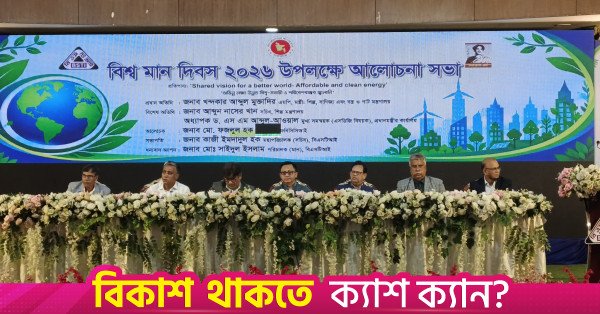
Industries Minister Khandakar Abdul Muktadir announced the plan at a discussion organised by BSTI today (14 October) to mark World Standards Day.
He said the government would also expand BSTI’s workforce and establish laboratories in 10 more districts to extend its services nationwide. Another project, estimated to cost Tk40 crore, is planned to strengthen the institution’s metrology capacity

“We want to take BSTI to a position where it retains international recognition even after Bangladesh’s graduation from the Least Developed Country (LDC) category,” he said.
The minister said product standards were directly linked to public safety and consumer confidence, not merely business and trade.
BSTI would prioritise food safety and strengthen quality control in food-related industries, he said. Its activities would also be expanded to ensure accurate fuel delivery at filling stations, correct LPG quantities and the quality of construction materials.
Industries Secretary Abdun Naser Khan said increasing production alone was not enough, stressing the need to improve product quality, productivity and international competitiveness. Efficient energy use was also essential to reducing industrial costs, he added.
BSTI Director General Kazi Imdadul Haque said the institution was strengthening its role in ensuring food safety, product quality and fair trade.
He proposed forming a specialised enforcement and intelligence unit under BSTI to identify sources of counterfeit, adulterated and substandard products and strengthen market monitoring.
Professor SM Abdul-Awal, principal coordinator for the Sustainable Development Goals at the Prime Minister’s Office, stressed the need to expand renewable energy use to strengthen energy security.
He also urged producers to work alongside BSTI to prevent food adulteration and the use of harmful chemicals.
Mohammad Fazlul Haque, administrator of the Federation of Bangladesh Chambers of Commerce and Industry, said BSTI should play a greater role in achieving the target of raising renewable energy’s share of electricity generation to 20% by 2030.
He called for quality and energy-efficiency standards for solar panels and electrical equipment, alongside greater public awareness.
He also stressed the importance of securing international acceptance for Bangladesh’s halal product and service certification.
About The Author