Under the proposed initiative, students could enrol in technical training centres or vocational institutions.
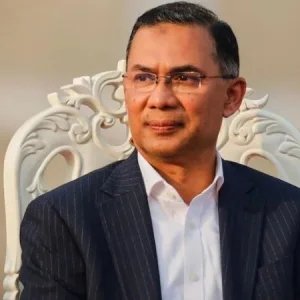
PM’s Adviser and PMO Spokesperson Mahdi Amin. File Photo: TBS
“>

PM’s Adviser and PMO Spokesperson Mahdi Amin. File Photo: TBS
Prime Minister Tarique Rahman has directed the education ministry to develop career pathways for students who failed or did not achieve their expected results in this year’s SSC examinations, his adviser Mahdi Amin said today (10 October).
The ministry will prepare a list of these students and consult education board chairmen and senior officials to identify training and employment opportunities for them, he said.
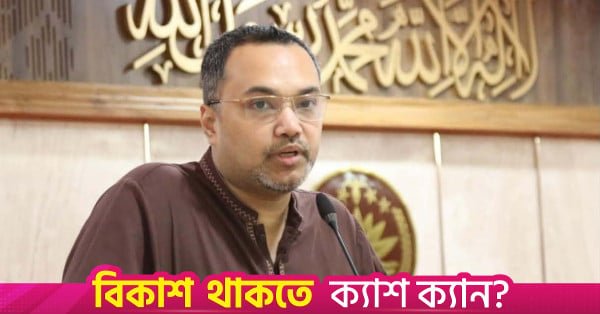
Mahdi, the Prime Minister’s adviser on Education and spokesperson for the Prime Minister’s Office, announced while addressing the “Challenged Students Conference 2026”, joint-organised by the Campaign for Popular Education (CAMPE) and Plan International Bangladesh at the Bangladesh-China Friendship Conference Centre in Dhaka.

“Before coming here, I spoke to the prime minister. I want to make an announcement to all of you on his behalf,” he told the students.
Referring to the 6.9 lakh students who initially failed the SSC and equivalent examinations this year, Mahdi said, “What kind of development would it be if we cannot change the fortunes of 6.9 lakh students in Bangladesh? That is unacceptable.”
Under the proposed initiative, students could enrol in technical training centres or vocational institutions. Those with promising business ideas could also receive small amounts of seed funding, he said.
The government is also prioritising foreign-language training, including Japanese, Korean, Chinese and Eastern European languages, to help students find jobs abroad.
Three- to six-month language courses alongside technical training could help many students enter the workforce, he said, adding that even an honours degree did not guarantee employment.
Mahdi said the government would also consider allowing students to retake failed subjects within three months instead of waiting a year, following appeals from teachers and guardians at the conference.
“We promise to consider it as positively as possible at the highest level of government,” he said, adding that implementing the change this year could be difficult, but the government would try to move forward quickly.
The original results, published on 10 August, showed that 6,90,608 candidates, or 37.75% of those who sat the SSC and equivalent examinations, had failed. Of them, 4,585 passed after their answer scripts were reassessed, according to revised results published on 10 September.
Urging students not to lose confidence over poor results, Mahdi said a student might perform well in seven subjects but fall short in one. A single subject, he said, could not determine a person’s future.
“Success in the SSC does not mean success in life, and failure in the SSC does not mean failure in life,” he said.
Students could excel in sports, culture, science or business regardless of their academic results, Mahdi said, adding that people’s abilities should not be judged solely by their certificates.
He said poor results could stem from financial hardship, a shortage of good teachers, inadequate classrooms, illness or family problems, rather than a lack of ability.
“There is no single reason why these 6.9 lakh students did not achieve their expected results. The reasons are multiple, and the government’s response must also be multiple,” he said.
Schools lacking science teachers needed more teachers, while those with inadequate classrooms needed better facilities. Students facing financial difficulties, meanwhile, needed assistance, he added.
Mahdi said the government would consult education experts and other stakeholders to develop a coordinated response.
The prime minister believed the state had the same responsibility towards students who failed to achieve their expected results as towards those who secured GPA-5, he said.
“The state and the government have the same responsibility towards them,” he added.
Mahdi also cited the more comprehensive reassessment of SSC answer scripts introduced this year, which goes beyond simply checking the addition of marks, as an example of possible examination reforms.
About The Author