The import pipeline is sufficient to ensure smooth supplies during Ramadan.
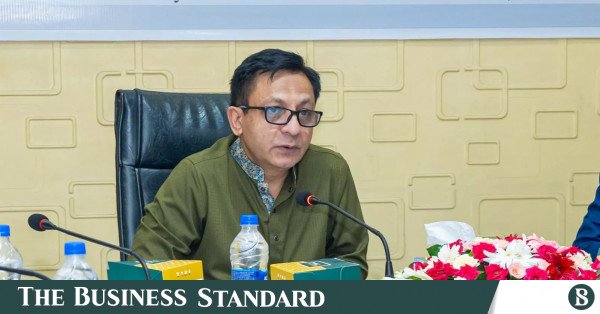
The file photo of Commerce Minister Khandakar Abdul Muktadir. Photo: Courtesy
“>

The file photo of Commerce Minister Khandakar Abdul Muktadir. Photo: Courtesy
The government will not tolerate any attempt by business syndicates to artificially raise the prices of essential commodities ahead of Ramadan, Commerce Minister Khandaker Abdul Muktadir said today (8 October).
“The government will not tolerate any syndicate-driven attempt to increase commodity prices during Ramadan,” he said at a meeting with traders and importers organised by the Chittagong Chamber of Commerce and Industry in Chattogram.
The minister said essential commodities currently in the import pipeline are sufficient to ensure smooth supplies during Ramadan and there will be no shortage of any essential item.

The government is working to keep prices of essential goods at tolerable levels by adjusting import duties and taxes and improving supply chains, he said.
“We need a planned supply chain so that essential commodities, particularly vegetables, remain available at relatively stable prices throughout the year,” Muktadir said.
He said this would require planned agricultural production across different parts of the country so that crops could be harvested at different times.
“If some vegetables are harvested in July, others in November and others in February, we can maintain a steady supply throughout the year,” he said.
The minister cited the expansion of watermelon cultivation in Sylhet, as well as grape and strawberry production in different parts of the country, as examples of changing agricultural patterns.
The government will map agricultural opportunities by region and encourage production accordingly to ensure year-round supplies, he added.
Govt working to cut logistics costs
Responding to traders’ concerns about transport restrictions affecting the movement of goods from Chattogram, Muktadir said he would discuss the issue with the road transport and communications minister.
Traders at the meeting objected to the 13-tonne weight restriction on roads connecting Chattogram with other parts of the country, saying it was increasing logistics costs and ultimately pushing up commodity prices.
The government is taking various measures to reduce transportation costs, which have a direct impact on commodity prices, the minister said.
He also said the government was working to reduce distortions in the supply chain involving importers, producers and distributors.
The government is also considering rationalising import taxes on certain essential products to help reduce prices, he added.
Online trade licences, easier import registration
The government is introducing an online system for trade licences, allowing businesses to apply from home, Muktadir said.
It is also taking steps to simplify the process of obtaining Import Registration Certificates (IRCs) and other essential import-related documents.
“Businesses will benefit from these measures very soon,” he said.
Muktadir said the government was also taking measures to cushion the impact of higher fuel prices and prevent the increase from feeding excessively into inflation.
Fuel price adjustments are a global reality, but the government had tried to absorb as much of the impact as possible before making a minimum adjustment, he said.
Traders pledge support for Ramadan supply
Chattogram Chamber President Mohammad Amirul Haque said traders were committed to ensuring uninterrupted supplies of essential commodities during the coming Ramadan.
He said the chamber would regularly meet importers and traders to monitor the availability and prices of key commodities.
“We will sit with you every 15 days. We know who is importing what because we are in an open market. If we find any product is likely to be in short supply, we will take steps to address it,” he said.
He said traders would cooperate with the government to ensure supplies of lentils, rice, chickpeas, wheat, soybean oil, palm oil and sugar.
The chamber president also urged the government to resolve logistics problems at Chattogram Port and improve the movement of goods from the port to other parts of the country.
He particularly called for the removal of the 13-tonne road weight restriction and an end to delays in arranging lighter vessels to transport cargo from Chattogram.
He also urged the government to review regulations governing lighter vessel charges and ensure greater competition in the sector.
The meeting was attended by former chamber presidents and senior business leaders, including Humayun Chowdhury, BGMMEA First Vice President Selim Rahman, former BGMMEA vice-president Nasir Uddin Chowdhury, and former vice-president SM Abu Tayeb, along with representatives of various trade bodies.
About The Author