Stakeholders say single bank system disrupted cargo payments and risked demurrage.
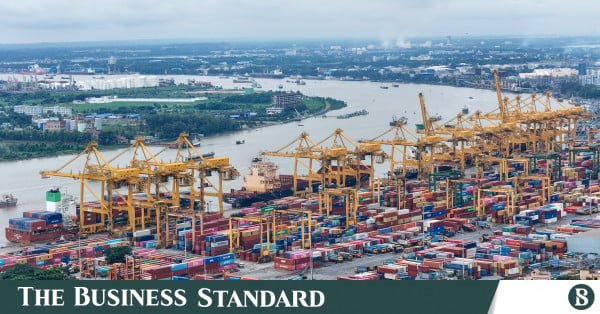
The photo shows a view of the New Mooring Container Terminal of Chattogram Port. A growing logjam of stranded import cargo at the port is eroding nearly two-fifths of the port’s operational capacity, dragging down turnaround times and inflicting severe losses on the country’s trade-driven economy. The photo was taken on Wednesday. Photo: Mohammad Minhaj Uddin
“>

The photo shows a view of the New Mooring Container Terminal of Chattogram Port. A growing logjam of stranded import cargo at the port is eroding nearly two-fifths of the port’s operational capacity, dragging down turnaround times and inflicting severe losses on the country’s trade-driven economy. The photo was taken on Wednesday. Photo: Mohammad Minhaj Uddin
A Chattogram Port Authority circular requiring port users to pay charges through Eastern Bank PLC triggered protests from importers, exporters and customs clearing and forwarding agents yesterday, prompting the authority to withdraw the directive later in the day.
The authority introduced the arrangement yesterday, disrupting some cargo clearance processes from 8am to 2pm as many traders and C&F agents said they did not maintain accounts with Eastern Bank. Traders feared delays could lead to demurrage and other costs.
Port users questioned why payments had to be routed through a single bank when several banks had previously provided payment facilities at the port’s One Stop Service Centre.

“Importers and exporters maintain accounts with different banks. It is not practical to expect everyone to have an account with one particular bank,” said Kazi Mahmud Imam, former general secretary of Chattogram Customs Agents Association.
“Previously, payment facilities at the One Stop Service Centre were available through several banks, including Janata Bank, One Bank and NRB Bank,” he added.
Imam said the sudden change created confusion among C&F agents and other users, who sought a return to the previous system. Following the protests, the port authority withdrew the circular and restored the previous payment arrangement in the afternoon, he said.
The controversy comes as the Chattogram Port Authority accelerates its digitalisation and automation drive to speed up services and reduce paperwork.
In a press release yesterday, CPA said 100% of vessel bills are now processed online, while container and consignee bills will be generated and collected through the Terminal Operating System (TOS).
A Sonali Bank PLC booth will be set up at the new One Stop Service Centre, with API integration for round-the-clock online payments, including holidays. The authority also plans fully online e-gate passes, gate-in and gate-out operations, time-slot management, cart tickets, e-gate challans and vessel e-NOCs.
An auto-pool payment system will be introduced for port charges if payments are not made within 72 hours. Special delivery assignments and auction deliveries will be processed online through the TOS, with the latter integrated with NBR and Customs via API.
Other measures include linking drop/pickup tickets and EIRs with e-gate passes, real-time document verification and bill generation, ICD integration, and payment-based truck parking at Bay Terminal after slot mapping. CPA aims to make the port fully paperless and smart by December 2026.
However, users have raised concerns over implementation. Mosharraf Hossain Bhuiyan, general secretary of the Chattogram Customs Agents Employees Association, alleged that the TOS has not functioned properly since its introduction.
“In some areas, there is insufficient manpower, while in others, the necessary equipment is available but not being used effectively,” he said. “The shortcomings are delaying cargo deliveries and causing difficulties for importers and customs agents.”
Port users said digitalisation could make cargo clearance more efficient, but payment arrangements should allow traders to use their existing banking channels instead of requiring accounts with a single bank.
About The Author