The NCP chief coordinator says the 11-party alliance is waiting for the right time to turn its eight-point movement into a one-point demand.
File photo of National Citizen Party (NCP) Chief Coordinator Nasiruddin Patwary. Photo: Courtesy
“>

File photo of National Citizen Party (NCP) Chief Coordinator Nasiruddin Patwary. Photo: Courtesy
National Citizen Party (NCP) Chief Coordinator Nasiruddin Patwary has said the 11-party alliance’s ongoing eight-point movement could eventually turn into a one-point movement demanding the resignation of Prime Minister Tarique Rahman.
“We are waiting to see when we can turn our eight-point demand into one point. That one point is the resignation of Tarique Rahman. We will return home only after Tarique Rahman resigns,” he said at a roadside rally in Gaibandha’s Palashbari today (19 September), as part of the 11-party alliance’s Dhaka-Rangpur long march.
Addressing supporters, Patwary said, “Are we afraid of Salahuddin Ahmed, Tarique Rahman, Chhatra Dal, Jubo Dal or BNP? We do not have time to count anyone. We will not bow down to BNP under any circumstances.”

He said the alliance would hold a mass rally in Dhaka after the long march reaches the capital and “settle the matter”.
“Prime minister travels around by helicopter and red bus, yet our single vehicle causes him to lose his temper,” he added.
Patwary also contrasted Tarique Rahman with his father, former president Ziaur Rahman.
“Where is Ziaur Rahman and where is Tarique Rahman? One gave his life for the people of the country, while the other has colluded with India,” he said.
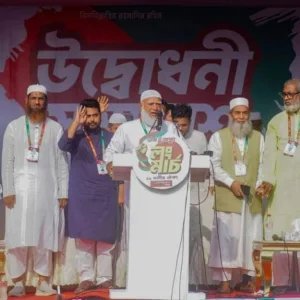
The convoy left Dhaka around 8am after the alliance held a rally at Manik Mia Avenue, where senior leaders addressed supporters.
The 11-party alliance is organising the long march with eight demands, including implementation of the referendum verdict, trials of those responsible for the July killings, resolving shortages of electricity, fuel, gas and fertiliser, and curbing rising prices of essential commodities.
Its other demands include ending corruption, extortion and land grabbing, improving law and order, ending narrow partisan practices and implementing the Teesta Master Plan.
About The Author