Highlights:
- Government establishes Tk1,500 crore renewable energy financing fund.
- Solar loans capped at 6%, including fees, for ten years.
- Fund supports rooftop solar, irrigation pumps, batteries, and inverters.
- Idcol, BIFFL and PKSF each receive Tk500 crore.
- Government targets renewable energy supplying 20% of electricity by 2030.
- Solar imports receive 1% duty, with several taxes waived.

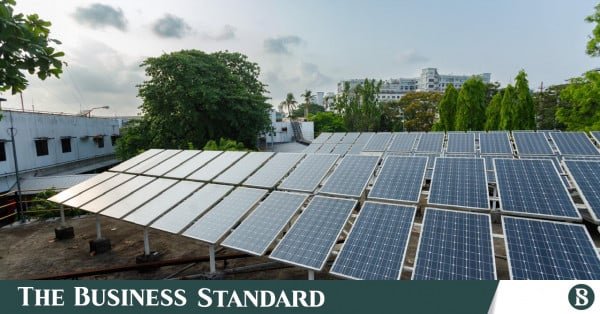
The government is setting up a Tk1,500 crore fund to provide low-cost loans to install and expand renewable energy systems, including rooftop solar power, across household, institutional and industrial sectors.
Loans will be available at a maximum interest rate of 6%, including all fees, with a one-year grace period and a repayment tenure of up to 10 years.
The fund will also support the modernisation of renewable energy technologies, according to a circular issued by the finance ministry on Tuesday.
The loans can be used for rooftop solar systems with net-metering connections, solar home systems, industrial solar installations, solar-powered irrigation pumps, and inverters, meters and batteries used for solar power generation and storage.
The government expects the initiative to encourage renewable energy use and reduce dependence on fossil fuels and the pressure of fuel subsidies.
Energy economist Shafiqul Alam welcomed the initiative, saying such a low-cost financing facility for expanding solar power generation had not previously been introduced in Bangladesh.
“The fund shows how much importance the government is giving to renewable energy. Involving Infrastructure Development Company Ltd (Idcol) and Palli Karma-Sahayak Foundation (PKSF) in distributing the loans will also allow people interested in solar power in rural areas to access financing,” he told TBS.
However, he said low-income households may still struggle to invest in solar systems even with subsidised loans.
“Capital subsidies or incentives for people below the poverty line could produce better results. India has such arrangements,” he added.
Describing the initiative as positive, former Finance Division Senior Secretary Mahbub Ahmed said the fund may not reach a large number of beneficiaries if distributed nationwide.
“Clear rules on the maximum loan size, eligible beneficiaries and monitoring mechanisms are necessary. Otherwise, the fund may not be used effectively,” he told TBS.
How fund to work
Of the Tk1,500 crore, Tk1,000 crore will come from a Tk2,000 crore block allocation for the SME sector in the current fiscal year’s budget. The remaining Tk500 crore will come from the government’s operating loan, according to the Finance Ministry circular signed by Joint Secretary Anarul Kabir.
The government will lend Tk500 crore each to Idcol, Bangladesh Infrastructure Finance Fund Ltd and PKSF.
The interest rate on the loans provided by the government to these three institutions will be only 0.50%.
The participating institutions will then lend directly or through partner organisations to end beneficiaries at a maximum effective interest rate of 5% per year, including all fees. The ceiling cannot be exceeded under any circumstances.
The participating institutions will also have to submit quarterly reports to the ministry detailing the solar capacity installed, the number of beneficiaries and loan recovery status.
They must submit an annual report, including audited accounts, within 90 days of the end of each fiscal year.
Govt pushes solar expansion
The government has set a target of generating 20% of the country’s total electricity demand from renewable sources by 2030 as it seeks alternatives to the existing fossil-fuel and import-dependent energy system.
Alongside the financing programme, the government has removed duties and taxes on imports of various solar power equipment and raw materials used to manufacture such equipment, while retaining a 1% duty.
According to an order issued by the Internal Resources Division (IRD) of the finance ministry on 16 September, all solar equipment imported for industrial use will be subject to a 1% duty, with the existing 15% VAT and 2% advance tax waived.
For non-industrial commercial importers, almost all solar equipment and components will also be eligible for import at a 1% duty, except for a few components that are manufactured locally.
Import taxes on those components had previously ranged from 23% to 64%.
The government has also been encouraging large investors to invest in renewable energy and promoting net metering for household-level solar systems.
Under the net-metering arrangement, the government plans to purchase electricity generated by solar producers at Tk10.50 per unit, providing an additional incentive for investment.
However, the new fund cannot be used to repay existing loans, evergreen loans, purchase land or shares, finance personal consumption or general administrative expenses, or fund any other scheme.
About The Author