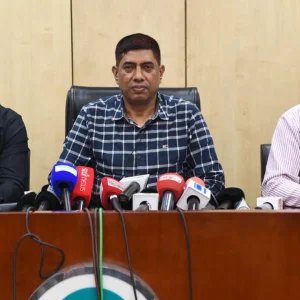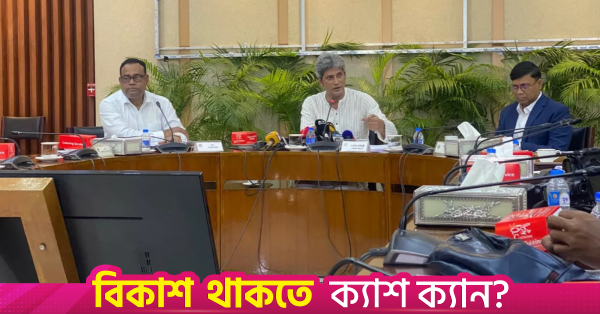
State Minister for Planning Zonayed Abdur Rahim Saki today (16 September) said the government wants to develop further metro rail lines in and around the capital and eventually extend the system to other major cities.
“Three metro rail projects approved today are not the end. Dhaka needs more metro rail lines, and more lines will have to be built around Dhaka. We also need to take metro rail to other major cities of the country,” he said at a press briefing after ECNEC meeting.
The remarks came as the Executive Committee of the National Economic Council (ECNEC) approved the MRT Line-5 Southern Route, along with revised proposals for other major metro rail projects.
Saki said the government’s longer-term plan is to build domestic capacity in metro rail technology so that Bangladesh can gradually undertake a larger share of the work itself.

“We have already built a metro rail line and trains are operating. Through that experience, capacity has been created in different areas related to metro rail construction,” he said.
He said the government is now focusing on technology transfer and institutional capacity building so that Bangladesh can develop expertise in areas ranging from construction to operation and maintenance.
The state minister also pointed to the planned introduction of electric commuter trains on the Dhaka-Narayanganj-Joydebpur route as part of a wider shift towards modern rail transport.
He said the electric commuter service would run on conventional railway tracks but would have a maximum speed of around 160 kilometres per hour, requiring suitable dual-gauge infrastructure.
Saki said Bangladesh would also need to develop the capacity to manufacture or undertake more of the equipment and technical components required for metro and electric rail systems domestically.
He said the government is also considering the wider economic benefits of mass transit, including reduced travel time, lower fuel consumption and improved productivity.
At the same time, he stressed that future projects would have to undergo closer scrutiny on cost, feasibility, design and value for money.
The state minister said the interest rate initially considered for the Japanese loan was around 0.7 percent, but Japan International Cooperation Agency (JICA) has recently revised its lending rate significantly.
“JICA has now informed us that it cannot offer the loan below 3.05 percent,” he said.
He said JICA reviews its lending rate periodically, including on a quarterly basis, meaning a further delay could expose Bangladesh to another revision in the borrowing cost.
“If we go another month or six months, we may have to accept a new interest rate. It is generally being estimated that the rate could move to 3.5 percent or higher,” Saki said.
The state minister said changes in Japan’s lending rates were linked to developments in the global economy and other factors affecting financing conditions.
He said the government considered metro rail essential for Dhaka’s transport system given the city’s population and traffic pressure, particularly the expansion of underground sections.
On reported faults in MRT Line-6, Saki said the government and relevant agencies were inspecting the affected areas and investigating the matter.
He said the authorities would take steps to ensure safety and restore affected sections quickly.
About The Author