Bangladesh is unlikely to face a fuel supply crisis until December despite procurement challenges and disruptions affecting shipping routes, Bangladesh Petroleum Corporation (BPC) Chairman Rafiqul Islam said today (15 September).
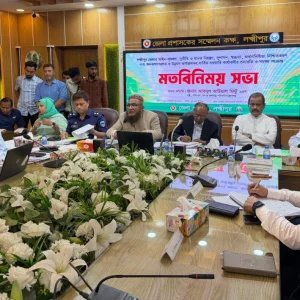
“There will be no problem with fuel supply until December,” he said at a views exchange meeting with journalists at BPC headquarters in Chattogram.
He said fuel procurement remained one of BPC’s key short-term challenges, but the corporation was taking necessary measures to ensure uninterrupted supplies.

“We are taking whatever is needed. Fuel procurement is a major challenge, but we are working so that there is no disruption,” he said.
Rafiqul said BPC had set December as the target for completing several immediate initiatives to strengthen the country’s fuel supply infrastructure.
Some projects could take longer because of technical, legal and other practical complications, he said, but the corporation was working according to specific deadlines.
“I believe in working according to specific dates and deadlines,” he said.
BPC works to operationalise fuel pipeline
BPC is working to remove the remaining obstacles to fully operationalising the Dhaka-Chattogram fuel pipeline, Rafiqul said.
The corporation has already discussed the issues with relevant parties and is working on specific solutions, he said.
The pipeline is expected to strengthen fuel transportation between Dhaka and Chattogram and reduce reliance on road-based transport.
BPC is also working to complete the Jet-1 pipeline project as early as possible.
The contractor wants to complete the project by March, but BPC is pushing for completion by December, Rafiqul said.
“We want it completed by December. We will try to finish it as soon as possible,” he said.
SPM operator appointment may come soon
On the long-delayed appointment of an operator for the Single Point Mooring (SPM) project, Rafiqul said a decision could be announced soon.
“We expect to hear something positive tomorrow,” he said.
The SPM project is intended to speed up the unloading of imported crude and refined petroleum products and reduce pressure on existing fuel-handling facilities.
ERL Unit-2 preparations underway
Preparatory work for Eastern Refinery Limited’s Unit-2 project is also progressing, Rafiqul said.
The project director has already started setting up the project office and identifying activities that can begin immediately.
“Some of the advance works can be started. We have identified those works and they will begin soon,” he said.
He acknowledged that court cases and other practical complications could delay some projects, making it difficult to set fixed completion dates in every case.
BPC explores alternative LPG import routes
BPC is exploring alternative sources and routes for LPG imports amid continuing disruptions in the Red Sea, Rafiqul said.
A meeting was held on Tuesday to discuss possible LPG imports from Nigeria, with BPC’s director of finance attending, he said.
“We are exploring all the operations and options available to us,” he said.
Following government approval, an LPG consignment could arrive by the end of this month, Rafiqul said.
BPC is considering two arrangements. Under one, LPG would be imported through an existing facility and distributed through operators. Under the other, shipments could be brought in through Bangladesh Shipping Corporation.
The first consignment could arrive this month, while a BSC-facilitated shipment is expected around December or January, he said.
“We are studying how much we can do through this arrangement. Work is ongoing,” he said.
LPG market expands rapidly
Rafiqul said Bangladesh’s LPG market had expanded significantly since the government adopted a strategic policy for the sector.
He recalled that LPG consumption was below 500,000 tonnes when he worked on a draft policy in 2016. Consumption has since risen to around 1.5 million tonnes, while the market has the potential to reach about 6.7 million tonnes, he said.
“Many new initiatives are being taken. They have not yet reached the mature stage, but we are trying to mature them as quickly as possible,” he said.
The chairman said BPC was pursuing the initiatives as LPG had become a government priority.
He also said new fuel infrastructure could not be completed overnight, particularly when private-sector participation was involved.
“There are gaps in many cases when we work with the private sector. It takes time to bridge those gaps,” he said.
Senior BPC officials and journalists covering the power and energy sector attended the meeting.
About The Author