He says an ICC report had acknowledged security concerns in India and claims Indian authorities made no effort to bring Bangladesh to the country.
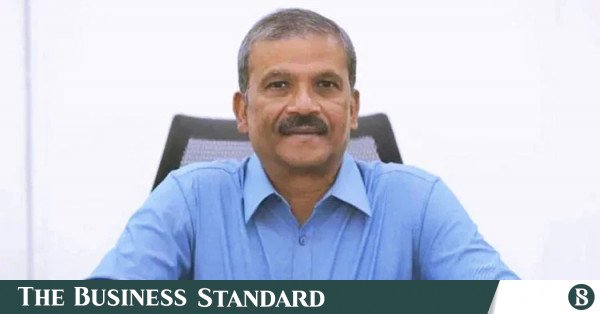
Former interim government youth and sports adviser Asif Nazrul. File Photo: BSS
“>

Former interim government youth and sports adviser Asif Nazrul. File Photo: BSS
Former interim government youth and sports adviser Asif Nazrul today (15 September) said the decision to keep Bangladesh out of the 2026 T20 World Cup in India was primarily his own – hours after a probe committee held him responsible for the team’s non-participation.
“I myself have said this publicly several times. So, I do not understand why the Ministry of Youth and Sports investigated the matter and published its findings after so long,” he said in a post on his verified Facebook page this evening.
Earlier in the day, a three-member probe committee formed by the Bangladesh Cricket Board (BCB) held Asif Nazrul responsible for Bangladesh’s non-participation in the T20 World Cup 2026 in India.

The committee, formed to investigate the circumstances behind Bangladesh’s absence from the tournament, said the players had been ready to travel to India but were compelled to follow the government’s decision.
Speaking to reporters, Barrister Faisal Dastgir, a member of the committee, said the then interim government was also responsible, while saying that Asif Nazrul was the person responsible after considering all aspects of the matter.
The committee was headed by Youth and Sports Ministry Additional Secretary Dr AKM Oli Ullah, with former Bangladesh captain Habibul Bashar as another member.
‘Why Bangladesh did not go to India’
The controversy began after Bangladesh pacer Mustafizur Rahman was dropped from the Kolkata Knight Riders squad for the Indian Premier League 2026 on 3 January this year following a decision by the Board of Control for Cricket in India.
In his Facebook post, Asif Nazrul wrote that Mustafizur was dropped from the IPL at the direction of the Indian cricket board under pressure from “extreme Hindutva forces”.
He described the move as humiliating and said Bangladesh then expressed reluctance to travel to India for the World Cup over security concerns and in protest against what he called the humiliation of Bangladesh.
“We then expressed our reluctance to travel to India for the World Cup in protest against the insecurity we feared and the humiliation of Bangladesh,” he wrote.
He also said those concerns were not unfounded, referring to “the ICC’s first report on the matter”.
According to Nazrul, the report identified three security concerns in India: the presence of Mustafizur in Bangladesh’s World Cup squad, the free movement of Bangladeshi supporters, and Bangladesh’s upcoming election.
He also said BBC Bangla had published an exact Bengali translation of the ICC report.
“Why would we go to India to play the World Cup in such a situation?” he wrote.
Nazrul said the Bangladesh government made several attempts to find another venue for the team to play its World Cup matches and received support from some countries.
“But perhaps because of Indian dominance under the ICC leadership, it was ultimately not possible,” he wrote.
He also claimed that “most importantly”, there had been no communication from the Indian authorities about bringing Bangladesh to India for the tournament.
Nazrul said three considerations were “very clear” behind the decision: the country’s dignity, the safety of its cricketers, journalists and supporters, and keeping the situation in Bangladesh stable ahead of the upcoming election.
At the time, there were concerns that Bangladesh’s decision not to play in the World Cup could lead to the country being excluded from playing against foreign teams.
Nazrul said those concerns were eventually overcome through various initiatives by the Bangladesh Cricket Board.
“I think we made the right decision,” he wrote.
“A small country should not be expected to silently accept humiliation whenever someone chooses to insult us. I believe in friendship with India based on equal dignity, not in bowing our heads and accepting everything,” he added.
About The Author