He says the principle should also apply to private institutions, the media and other sectors.
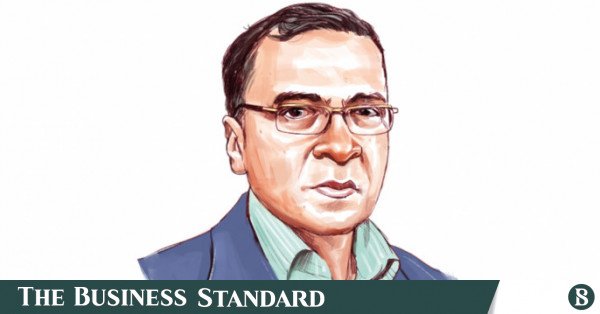
Transparency International Bangladesh Executive Director Iftekharuzzaman. Sketch: TBS
“>

Transparency International Bangladesh Executive Director Iftekharuzzaman. Sketch: TBS
Transparency International Bangladesh (TIB) Executive Director Iftekharuzzaman has accused the government of moving to politicise state institutions instead of making them effective and independent after the national election.
Political parties had historically competed to bring state institutions under partisan control, making them dysfunctional and weakening their role in supporting democracy, Iftekharuzzaman said at a discussion titled “Democracy, Human Rights and an Accountable Government System” at TIB’s office in Dhanmondi today (15 September), marking International Democracy Day.
He alleged that the current government was following a similar path, citing the appointment of a loan defaulter as Bangladesh Bank governor, politically motivated appointments of university vice-chancellors, and administrators in local government institutions.

“The National Human Rights Commission has been abolished. There is no Information Commission. The Anti-Corruption Commission has been made ineffective for six months,” he said.
“Not only that, in framing the laws governing these institutions, which should be designed to make them strong, independent and impartial, a very systematic process is being created to keep the institutions under government control,” he added.
Chairman of the Standing Committee on the Ministry of Law, Justice and Parliamentary Affairs Barrister Muhammad Nawshad Zamir said political parties may appoint their people to different positions after coming to power, but merit must be ensured.
He said the principle should also apply to private institutions, the media and other sectors.
Prime Minister’s Adviser Mahdi Amin said stakeholders were being consulted in the lawmaking process and that laws could be amended after enactment.
He also rejected allegations of state-sponsored or politically motivated harassment, saying any errors at the grassroots level were being addressed when reported to the central authorities.
The adviser said the BNP government had ensured unprecedented freedom of expression and human rights during its first seven months, although some limitations remained. “It is difficult to uproot 17 years of fascist debris all at once,” he added.
Responding, Iftekharuzzaman said TIB data did not support the claim that there had been no human rights violations. TIB had recorded at least 52 incidents of harassment linked to freedom of expression, with 58 people arrested, mostly under the Anti-Terrorism Act.
He also reported more than 1,700 incidents of violence against women and girls, including 503 rape cases, 51 incidents of custodial torture, seven deaths at the hands of law enforcement agencies and one reported enforced disappearance involving a law enforcement agency.
Iftekharuzzaman said the police had yet to recover ethically, although there were valid reasons why the law-and-order situation had not returned to normal.
Bangladesh Samajtantrik Dal Barishal district committee member secretary and women’s leader Manisha Chakraborty and former NCP leader Tasnim Zara, among others, attended the event.
About The Author