He says the opposition has every right to criticise the government and question each of its actions.
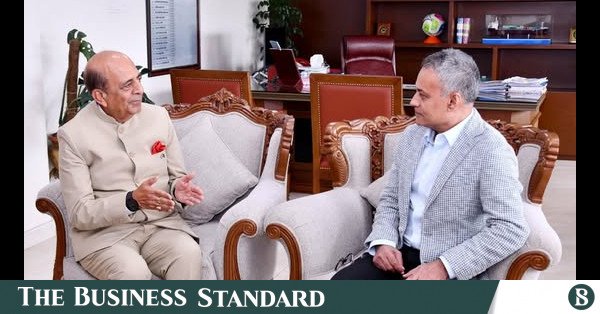
Prime Minister’s Political Adviser and BNP Acting Secretary General Ruhul Kabir Rizvi speaks at a seminar at the National Press Club today, 8 September 2026. Photo: TBS
“>

Prime Minister’s Political Adviser and BNP Acting Secretary General Ruhul Kabir Rizvi speaks at a seminar at the National Press Club today, 8 September 2026. Photo: TBS
Prime Minister’s Political Adviser and BNP Acting Secretary General Ruhul Kabir Rizvi today (8 September) said strong criticism is an essential part of democracy, but it should not cross the line into obscenity or personal abuse.
“Criticism can be made in harsh language, but it should not be obscene. Using obscene words to personally abuse someone is a punishable offence under the law,” he said at a seminar titled “Recent Gas and Power Crisis: What the Government and People Should Do” at the National Press Club.
He said the opposition has every right to criticise the government and question each of its actions.

“Only through such criticism can the government understand and recognise its mistakes and take necessary measures accordingly. This is a characteristic of a democratic government and a democratic society,” he said.
Rizvi said Bangladesh’s democracy has repeatedly suffered because its institutions are not strong enough.
Among the institutions that need to be strengthened are the higher judiciary and the media, he said.
“If these institutions remain strong, democracy cannot be pushed aside to establish fascism or dictatorship,” Rizvi said, adding that institutions should develop independently and carry out their responsibilities normally.
On the ongoing energy crisis, Rizvi said the situation was not created by Prime Minister Tarique Rahman, describing it as a global crisis caused by the war in the Middle East.
He referred to the conflict involving the United States, Israel and Iran over the Persian Gulf and the Strait of Hormuz, saying the region is home to major oil-producing countries.
Around 140 to 145 ships pass through the Strait of Hormuz every day, he said, adding that most of the LNG cargo imported by Bangladesh also comes through the route.
Rizvi said the government was not simply sitting idle by blaming the previous government’s failures.
“The government has allocated Tk40,000 crore outside the additional budget for this sector so that gas can be brought in as quickly as possible,” he said.
He added that arrangements had also been made to source gas from nearby countries, including Myanmar, Malaysia and Indonesia.
About The Author