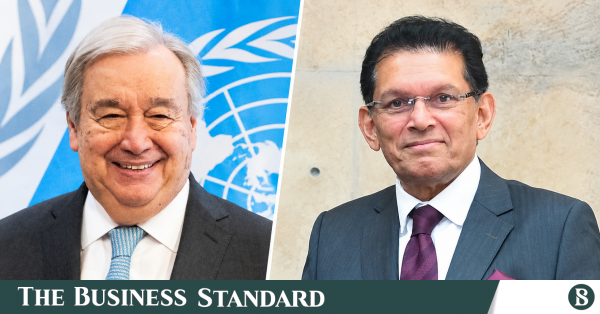
“We have long called for a strong, independent national institution to oversee law enforcement agencies in Bangladesh,” Türk says.
The file photo of UN High Commissioner for Human Rights Volker Türk. Photo: Collected
“>

The file photo of UN High Commissioner for Human Rights Volker Türk. Photo: Collected
UN High Commissioner for Human Rights Volker Türk has called for the establishment of a strong and independent national institution to oversee the activities of Bangladesh’s law enforcement agencies.
He made the call yesterday (7 September) while addressing the 63rd session of the UN Human Rights Council in Geneva as part of his remarks on the global human rights situation.
“We have been calling for a strong and independent national institution that can oversee the work of law enforcement agencies in Bangladesh,” Türk said.

The UN rights chief has repeatedly stressed the need to ensure accountability of law enforcement agencies and related bodies in Bangladesh. He has also highlighted the need for stronger institutional mechanisms to independently monitor their activities.
The Office of the UN High Commissioner for Human Rights (OHCHR) published a fact-finding report on 12 February 2025 on serious human rights violations during the 2024 July Uprising in Bangladesh.
The report made 44 recommendations aimed at improving the country’s human rights situation, including calls for independent oversight of law enforcement agencies, independent investigations into serious human rights violations, institutional reforms and stronger civilian oversight and accountability mechanisms.
The report also referred to recommendations from UN treaty bodies, which monitor the implementation of international human rights treaties.
Those recommendations called for Bangladesh’s National Human Rights Commission (NHRC) to have the authority to directly investigate allegations of human rights violations committed by members of the armed forces, police and other law enforcement agencies.
They also called for adequate resources for the commission and a transparent, participatory and merit-based appointment process consistent with the Paris Principles.
Meanwhile, human rights organisations and legal experts have recently raised concerns that Bangladesh’s newly enacted laws on enforced disappearances and the NHRC do not fully meet international human rights standards.
They have said the laws contain shortcomings regarding the independence, investigative powers and accountability of the institutions concerned.
About The Author