Mahdi Amin calls for market diversification, skills development and third-language proficiency.
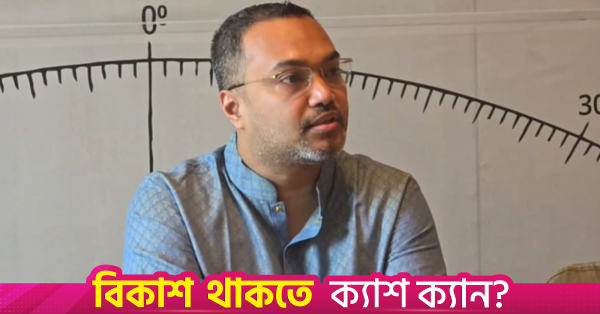
Prime Minister’s Adviser Mahdi Amin. Photo: UNB
“>

Prime Minister’s Adviser Mahdi Amin. Photo: UNB
Diversifying Bangladesh’s overseas labour market beyond the Gulf Cooperation Council (GCC) countries is a key priority of the current government, Prime Minister’s Adviser Mahdi Amin said today (3 September).
“Market diversification and expansion should be the first policy intervention. Not only the GCC, but Southeast Asia, Eastern Europe and other countries are also potential destinations,” he said at a dialogue titled “Future of Bangladesh’s Workforce and Economic Engagement with the GCC (Middle East) Region”, organised by ARISE Bangladesh Foundation at a city hotel.
Mahdi Amin said Bangladesh needs to focus on three key areas – market diversification, skills development and third-language proficiency – to strengthen its overseas employment sector. “Language skills are a very vital issue. That is why we are focusing on language skills as well.”

Prime Minister’s Adviser Mahdi Amin speaks at a dialogue titled “Future of Bangladesh’s Workforce and Economic Engagement with the GCC (Middle East) Region” at a city hotel today, 3 September, 2026. Photo: TBS
“>

Prime Minister’s Adviser Mahdi Amin speaks at a dialogue titled “Future of Bangladesh’s Workforce and Economic Engagement with the GCC (Middle East) Region” at a city hotel today, 3 September, 2026. Photo: TBS
“We have clear guidelines. The government is working to prepare our youth for the future job market, both at home and abroad,” he added.
Responding to a question about syndication in the overseas labour market, Mahdi Amin said Bangladesh faces limitations in generating overseas employment as destination countries impose various conditions on the recruitment of foreign workers.
“But we are committed to protecting our migrants’ rights by reducing migration costs,” he said.
Speaking at the event, ASM Aman Ullah, vice-chancellor of the National University, said around 7 lakh graduates enter the labour market from the university every year, most of whom are semi-skilled or unskilled.
“We are committed to producing at least 2 lakh skilled graduates each year, primarily for the international labour market,” he said.
He said North American countries are seeking allied health professionals from Bangladesh.
“If the National University gets the mandate, we could produce at least 1 lakh such health professionals,” he added.
Bdjobs.com CEO Fahim Mashrur suggested introducing short-term skills development programmes targeting specific overseas job markets.
Kanij Fatima, executive director of ARISE Bangladesh Foundation, said construction, tourism, IT and renewable energy would be among the sectors driving transformation in the GCC over the coming decade.
“We have youth and technology, but we cannot utilise them properly within the economy. Our trainees and graduates cannot enter international markets based solely on our existing curriculum. International employers always want skills aligned with their own curricula,” she said.
About The Author