Highlights
- Nine-month transition planned for FY2027-28
- New fiscal cycle starts from FY2028-29
- Monsoon delays cited behind major policy shift
- Legal and technical changes will be required
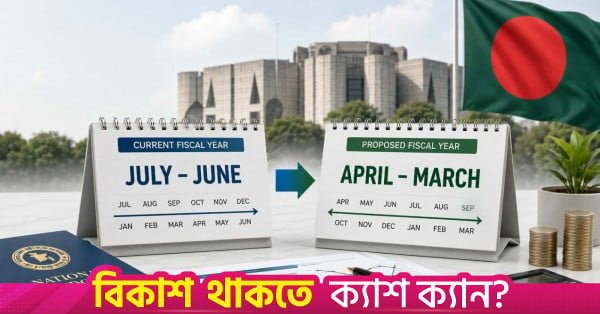
The government has decided to shift Bangladesh’s fiscal year from the existing July-June cycle to April-March to reduce delays in development project implementation and address quality concerns and public suffering during the monsoon season.
The proposal was approved at a cabinet committee meeting chaired by Prime Minister Tarique Rahman at his office today (17 August), according to a statement from the prime minister’s press wing.

Under the new arrangement, the fiscal year will run from 1 April to 31 March.
The 2027-28 fiscal year will serve as a transitional nine-month fiscal year, running from July 2027 to March 2028. The new April-March cycle will take effect from FY2028-29.
According to the Finance Division’s proposal, Bangladesh currently follows a fiscal year from 1 July to 30 June. As a result, many infrastructure projects under the Annual Development Programme (ADP) remain under implementation towards the end of the fiscal year, particularly during the July-August monsoon.
Rainfall often delays such projects, affects construction quality and increases public suffering. The government believes shifting the fiscal year to April-March will allow more infrastructure work to be completed before the monsoon begins.
The change will involve more than shifting the budget cycle, with major technological changes required in various systems linked to government financial management.
Amendments to the Constitution and the General Clauses Act, 1897, will also be necessary.
A committee comprising representatives from the Cabinet Division, Bangladesh Bank, National Board of Revenue (NBR), Legislative and Parliamentary Affairs Division and Finance Division, among other stakeholders, will be formed to determine the next steps.
The committee will oversee the legal, administrative and technical preparations required to implement the change.
The issue of changing Bangladesh’s fiscal year has been discussed for years, particularly because the July-June cycle creates pressure to accelerate government spending and development project implementation towards the end of the fiscal year.
In June this year, Opposition Leader Dr Shafiqur Rahman also proposed changing the fiscal year. He favoured a January-December cycle instead of July-June, arguing that attempts to implement a large portion of the ADP during the monsoon and natural disasters at the end of the fiscal year create opportunities for irregularities and wastage.
Various quarters have previously called for changing the fiscal year. India and several other countries currently follow an April-March fiscal year.
Proponents of the change have cited not only the difficulties of implementing development projects during the monsoon but also the tendency for government spending to surge towards the end of the fiscal year.
June, the final month of the current fiscal year, also creates significant pressure on revenue collection and development spending.
In the first 11 months of FY2025-26, the NBR collected Tk360,642 crore in revenue, leaving a shortfall of Tk81,442 crore against the revised target.
At the same time, government agencies face pressure to accelerate development project implementation towards the end of the fiscal year.
The national budget for FY2026-27 has been set at Tk9.38 lakh crore, with a significant portion allocated to development and operational expenditure.
If implemented, the new fiscal year will bring major changes to the annual cycle of budget preparation, revenue collection, government spending, banking operations, accounting and development project implementation.
The government plans to introduce the changes gradually through the nine-month transitional fiscal year.
About The Author