The accused, Kaushik Debnath, surrendered before the High Court and sought bail on 7 July.
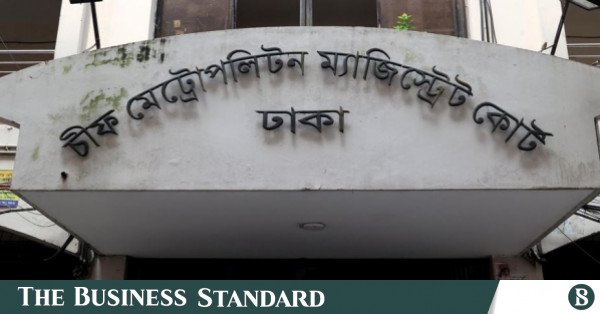
Chief Metropolitan Magistrate Court, Dhaka. File Photo: BSS
“>

Chief Metropolitan Magistrate Court, Dhaka. File Photo: BSS
A Dhaka court today (17 August) sent a PSC official to jail after rejecting his bail petition in a case filed over the leaking of questions for the Bangladesh Civil Service (BCS) examinations.
The accused, Kaushik Debnath, surrendered before Dhaka Metropolitan Sessions Judge Mohammad Shahjahan Kabir and sought bail, confirmed Md Riaz Hossain, bench assistant to the concerned court.
During the hearing, his lawyer, Md Shariful Islam, argued that the allegations mentioned in the First Information Report (FIR) and the charge sheet were false, baseless and fabricated.

He also told the court that his client had no involvement in the alleged incident. The prosecution opposed the bail petition.
After hearing arguments from both sides, the court rejected the plea and ordered that Kaushik be sent to jail.
Earlier, on 7 July, Kaushik had surrendered before the High Court and sought bail. The court then directed him to surrender before the lower court within six weeks.
On 8 July, 2024, CID Sub-Inspector Nippon Chandra Chanda filed the case with Paltan Police Station under the Bangladesh Public Service Commission Act. The case names 31 people as accused and includes 50–60 unnamed individuals.
Following an investigation, CID Additional Superintendent of Police Suman Kumar Saha, the investigation officer in the case, submitted a charge sheet against 55 people, including Abed Ali, on 18 May.
According to the charge sheet, questions and answers were supplied to selected candidates before examinations under the leadership of Abed, identified as the ringleader of the question-leak syndicate.
Candidates were taken to designated locations and made to memorise the leaked questions and answers before being sent to examination centres on the day of the tests. In exchange, members of the syndicate collected large sums of money in advance, added the chargesheet.
The investigation found that the network operated across various districts and involved government employees, current and former PSC officials and staff, businesspeople, medical professionals, students and people from various other professions.
The charge sheet also said the network extended from the Bangladesh Government Press (BG Press) to various government institutions and private non-governmental organisations.
The syndicate operated for an extended period, compromising the confidentiality of examinations and undermining the credibility of the country’s public recruitment system.
About The Author