Salahuddin Ahmed says the government is not taking the report into account, arguing that its assessment of Al-Qaeda’s presence in Bangladesh is based on assumptions.
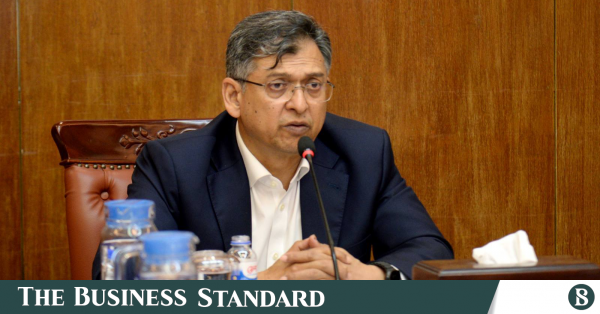
File photo of Home Minister Salahuddin Ahmed. Photo: Collected
“>

File photo of Home Minister Salahuddin Ahmed. Photo: Collected
Home Minister Salahuddin Ahmed today (17 August) said the government is not taking any action based on a recent UN Security Council report on Al-Qaeda’s presence and activities in Bangladesh, saying he has not yet read the report and that its assessment appears to be based on assumptions.
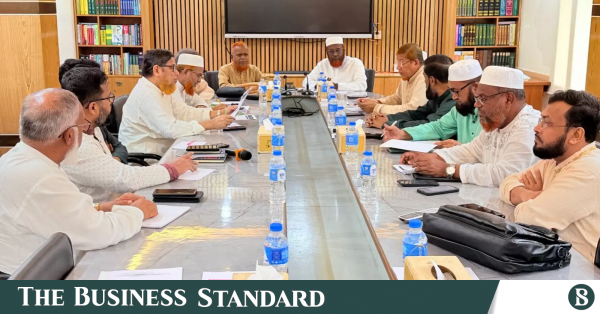
He made the remarks while responding to reporters after a meeting of the committee formed to formulate recommendations on the report of the Bangladesh Judicial Service Pay Commission 2025 at the Finance Ministry’s meeting room in the Secretariat.
Recently, a UN Security Council report expressed concern over Al-Qaeda’s activities in Bangladesh, saying the group was attempting to establish a permanent base and covert cells in the country.

Asked about the report, Salahuddin said, “I heard about it, but I haven’t read it. It may contain some observations. I cannot comment without reading it.”
“We are not taking these into consideration. I have not read the report yet. Besides, as far as I have heard, it says they have assumed that such a thing could happen. So, we are not taking any action based on an assumption-based report,” he added.
The home minister also spoke about the country’s law and order situation, saying there had been a visible improvement over the past six months, or 180 days. However, he said the people would assess whether they were satisfied with the situation.
“We have completed only six months. During this period, we have undertaken many reforms and you have seen several commendable initiatives by the law enforcement agencies,” he said.
He said various initiatives and programmes undertaken and implemented by the government over the past 180 days had received appreciation from the public. He added that several commendable and public welfare-oriented initiatives had been taken in line with the roadmap announced by the prime minister.
Salahuddin also claimed that the government had successfully dealt with a series of global and domestic crises since taking office.
He said the government did not immediately increase fuel prices despite the global energy and gas crisis caused by the Russia-Ukraine war. To protect farmers’ interests during the Boro season, the government delayed the price increase for around a month before deciding on an adjustment at a tolerable level, he said.
According to the minister, fuel prices in the global market and neighbouring countries had almost doubled during that period.
He said the longstanding gas and energy crisis inherited from the previous government could not be resolved overnight and that the current government was working on a sustainable, long-term plan to address it.
Ensuring primary energy supplies is essential to attract global investors, expand trade and business and maintain production, he said. To this end, a decision has been taken to establish a full-fledged land-based LNG terminal at Matarbari following an inspection of the Matarbari deep-sea port led by the prime minister, he added.
The government has also taken an initiative to establish multiple floating storage and regasification units (FSRUs) to address disruptions in gas supply caused by frequent mechanical problems at the existing Summit and Excelerate Energy floating terminals, he said. Surveys are currently underway to identify suitable locations for the terminals, according to the minister.
Salahuddin said new gas exploration activities had begun both onshore and offshore to reduce dependence on imports, adding that a sustainable solution to the problem would be achieved within the next few years.
On social security and public welfare measures, he said the government had approved and implemented what he described as a historic decision to waive agricultural loans of up to Tk10,000 at its first Cabinet meeting. Family cards and farmer cards are also being distributed by the government, he added.
He further said monthly honorariums were being provided to religious officials and imams and muezzins of different faiths. The government had also taken several welfare measures, including providing social and state recognition to athletes and cultural figures, he said.
As chairman of the National Procurement Committee for ensuring food security, the home minister said sound government policies and timely decisions had enabled the country to build a strong and secure food stock.
Asked about rumours that he could be given charge of another ministry, Salahuddin said, “I have also heard the rumour.”
The government is expected to soon release a consolidated account of the progress made by various ministries during its first 180 days through the prime minister’s press wing or the respective ministries and departments.
About The Author