Highlights
- Bangladesh has 23 green ship-recycling yards, but worker deaths persist
- Twelve shipbreaking workers have died in Bangladesh during 2026
- Nine workers died at certified green yard Ferdous Steel
- Safety inspections had flagged Ferdous Steel’s shortcomings months earlier
- Green certification does not guarantee consistent workplace safety enforcement
- Bangladesh recorded 161 shipbreaking worker deaths since 2014
Bangladesh now has 23 ship-recycling yards classified as “green,” of which 17 have been formally notified to the International Maritime Organization (IMO) under the Hong Kong Convention.
Twenty-two of the 23 yards have achieved green status since 2022, reflecting the industry’s rapid push towards greener practices.

Yet 12 shipbreaking workers have died in 2026 alone, the highest annual toll since 2021, with more than four months of the year still to go.
Ferdous Steel, whose government authorisation is valid until 29 October 2030, is among the yards certified as green.
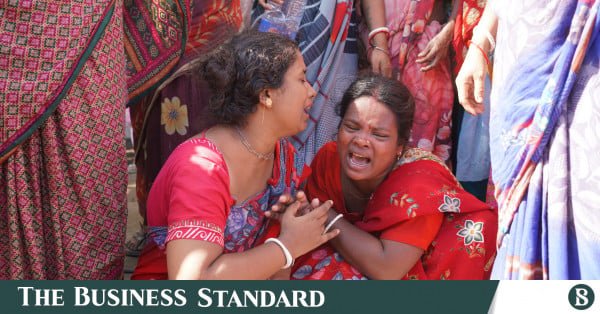
Nine workers died yesterday (14 August) at the ship-recycling yard carrying three international certifications, exposing a stark contradiction at the heart of the country’s rapidly expanding green shipbreaking industry.
Ferdous Steel Ship Recycling Industries in Chattogram’s Sitakunda is authorised under the Hong Kong International Convention for the Safe and Environmentally Sound Recycling of Ships and was among the Bangladeshi facilities promoted as evidence that an industry long associated with deaths, toxic exposure and pollution is becoming safer.
The company says it also holds a Statement of Compliance from the Indian Register of Shipping (IRClass) under the Hong Kong Convention, a quality certification from Bureau Veritas and certifications from Japan’s ClassNK covering environmental management, occupational health and safety and ship-recycling management.

Bangladesh once had 156 registered shipbreaking yards, of which around 70-80 were active. The Cabinet approved the country’s accession to the Hong Kong International Convention for the Safe and Environmentally Sound Recycling of Ships on 12 June 2023.
Bangladesh formally entered into the convention in June 2025.
Of the country’s current 31 ship-recycling yards, 23 have achieved full green certification and eight hold provisional certificates.
A shipbreaking yard is designated green when it replaces traditional, hazardous beaching practices with engineered safeguards and standardised safety protocols designed to minimise environmental pollution and protect workers. Specifically, a green yard incorporates environmental infrastructure, international standards and certification, and worker and operational protections.
The nine deaths have brought a central question into focus: does a green certificate mean a yard is genuinely safer, or can certification become a form of greenwashing when standards are not enforced after approval?
Safety warnings before nine deaths
Questions over Ferdous Steel’s safety record had emerged months before the accident.
The Department of Inspection for Factories and Establishments (DIFE) inspected the yard on 9 February and found shortcomings in worker safety and labour rights.
At the time, inspectors said workers had not been adequately informed about safety equipment and safe working procedures and that the yard had failed to submit a required risk assessment report for shipbreaking operations.
The department issued several notices seeking corrective action.
After what inspectors considered an inadequate response, it filed a case with the relevant labour court in July against owner Ferdous Wahid and Manager Md Yousuf Ali.
Inspectors had also received allegations that workers were made to work 10 to 11 hours without overtime pay and were required to work on Fridays – the day the nine workers died.
An explosives department official said hydrogen sulphide had accumulated in a ballast area of the 30,770-tonne MT Rasi, a former LNG carrier.
According to witnesses, several workers were exposed while trying to rescue colleagues who had collapsed, raising further questions over gas testing, confined-space procedures and emergency preparedness.
‘Green’ yards, fatal accidents
Bangladesh’s shipbreaking industry has spent heavily on impermeable flooring, hazardous-waste systems and worker protection infrastructure, with yard owners citing more than Tk2,000 crore invested over the past two years.
The country now ranks second globally, behind Türkiye, in the number of recycling facilities formally listed under the Hong Kong Convention.
But fatalities have continued at yards associated with the industry’s green transition:
In 2023, cutter Md Harunur Rashid, 39, died after falling from a ship at Toggi Green Ship Breaking and Recycling Limited.
In September 2024, an explosion at SN Corporation, also certified green and Hong Kong Convention-compliant, killed six workers, prompting a three-month closure and a fine.
In 2025, cutting helper Azim Uddin, 60, died at Jamuna Ship Breaking Yard shortly after it had received green certification. The Industrial Police said he had fallen from a height; yard management said he had fallen ill.
“A Green Certificate does not guarantee that a ship recycling yard is 100% safe,” Muhammad Ali Shahin, head of advocacy at Young Power in Social Action (YPSA), told The Business Standard.
He said basic protective measures could have saved the Ferdous Steel workers and warned that certificates were meaningless if yards failed to implement the standards.
Shahin called for regular monitoring, proper risk assessment, adequate worker training and strict compliance with the Hong Kong Convention.
“Ship recycling should never be rushed at the cost of workers’ lives. Safety must come before speed and accountability must be ensured.”
What ‘green’ really means
Ferdous Steel’s certifications make the latest deaths especially significant. The Bangladesh Ship Recycling Board has authorised the facility under the Hong Kong Convention and it is formally included among the country’s IMO-listed recycling yards. But there are conflicting accounts of another certification status.
Mohammad Yousuf, a manager at the yard, told TBS it held IRClass and Bureau Veritas certifications and was still being assessed by ClassNK.
However, CEO Md Asaduzzaman said the company received ClassNK certification in April 2026 and held all three certifications.
The discrepancy highlights a broader problem in the industry’s green transition: government authorisation, international listing and private certification are often bundled together under the single term “green yard.”
For workers, though, the certificate’s issuer matters less than whether gas testing is carried out, hazardous spaces are properly inspected, safety equipment is used and supervisors enforce procedures every day.
Ferdous Steel’s nine deaths have renewed scrutiny of safety at certified ship-recycling yards. The accident occurred on Friday, a weekly holiday at most yards, with relatives alleging workers had been pressured to report for duty.
Questions have also emerged over confined-space checks, gas testing, protective equipment and supervision.
161 deaths since 2014
Data provided to TBS records 161 shipbreaking worker deaths between 2014 and 14 August 2026: nine in 2014, 16 in 2015, 17 in 2016, 15 in 2017, 20 in 2018 and a peak of 22 in 2019.
The toll fell to 11 in 2020 before rising to 14 in 2021, then declined to 10 in 2022, five in 2023 and seven in 2024.
It dropped further to three in 2025, making the 12 deaths already recorded in 2026 four times last year’s total, even as the industry’s certification drive has never been more advanced.
Bangladesh has built an elaborate certification and inspection system, but repeated deaths suggest that no single authority is ensuring that those safeguards are actually followed throughout the dismantling process.
From certification to accountability
Designed to reduce risks to workers, human health and the environment from ship recycling, the Hong Kong Convention entered into force on 26 June 2025.
For Bangladesh, compliance has become central to rebuilding the reputation of an industry long associated with explosions, toxic exposure and worker deaths.
The physical transformation of many yards is visible – impermeable floors, drainage systems, waste-management facilities – but infrastructure is only one part of safety.
A certified management system cannot protect a worker if its procedures are ignored. A safety plan cannot prevent an accident if workers are inadequately trained. And a certificate cannot substitute for regular inspection and enforcement.
After 161 worker deaths since 2014 and 12 already this year, the industry’s next test is not how quickly it can add more green yards; it is whether those claims hold up where they matter most: in the everyday survival of the workers dismantling the ships.
Bangladesh’s shipbreaking industry began commercially in Sitakunda in the 1970s, growing into a major source of scrap, jobs and recovered goods, supplying about 70% of the raw material used by domestic steel re-rolling mills. In FY2023-24, 166 ships carrying 975,000 tonnes of iron were imported for recycling.
About The Author