Exporters say they are now seeking a share of the refunds or, at the very least, some form of compensation through their continued business relationships with US buyers
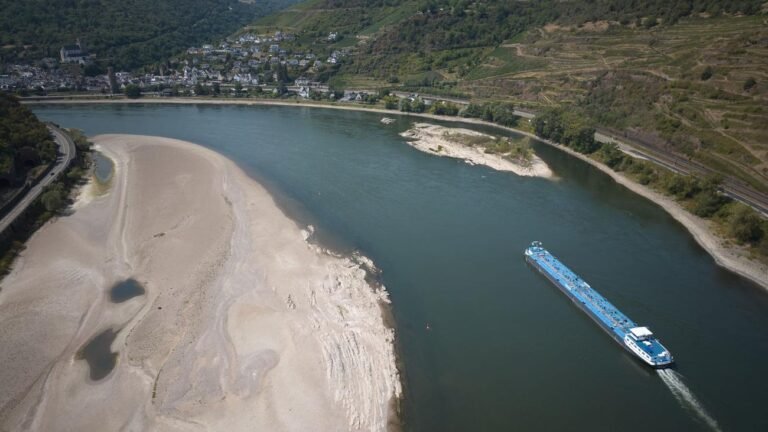
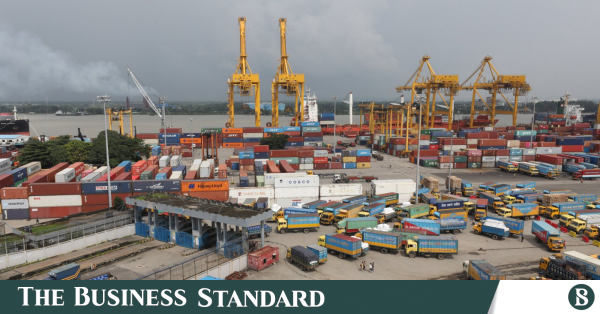
An aerial view of Chattogram Port. File Photo: Mohammad Minhaj Uddin/TBS
“>

An aerial view of Chattogram Port. File Photo: Mohammad Minhaj Uddin/TBS
Highlights:
- US buyers are receiving tariff refunds after Supreme Court ruling
- Bangladeshi exporters seek compensation for previously absorbed tariff costs
- Some exporters accepted significant price cuts to retain US orders
- Buyers may compensate through higher prices or increased orders
- LDP exporters may legally claim tariffs paid to US
- Industry associations lack data on exporters’ total tariff burden
At the height of the 2025 reciprocal tariff hikes, many US apparel buyers pressured Bangladeshi garment exporters to share the burden, forcing suppliers to cut prices or offer discounts to keep orders flowing.
Many exporters agreed, effectively absorbing part of the tariff burden to protect their business with major US buyers.

Now, the equation has changed.
Following the US Supreme Court’s February ruling declaring the tariffs illegal, major US buyers have begun receiving refunds for the duties they paid. The Trump administration has so far issued around $100 billion in tariff refunds out of the $166 billion it had collected under the reciprocal tariff regime.
Infograph: TBS
“>

Infograph: TBS
This has left Bangladeshi exporters asking: if buyers are getting their tariff money back, what happens to the suppliers who helped bear the cost?
Exporters say they are now seeking a share of the refunds or, at the very least, some form of compensation through their continued business relationships with US buyers.
Rakibul Alam Chowdhury, managing director of HKC Apparels, said, “At that time, we shared one-third of the additional cost with buyers, and in some cases, up to half. Now that the money has been refunded, we’ve started communicating with buyers.”
“The buyers are saying they will refund the money,” he told The Business Standard.
HKC Apparels is among the Chattogram-based garment manufacturers affected by the tariff. About 90% of the company’s exports go to the US market.
Representatives of US buyers also believe suppliers should receive compensation.
However, they said direct refunds may be difficult. Instead, the losses could be partially offset through higher prices in subsequent orders, increased order volumes, or concessions on costs such as air shipments and discounts when such situations arise for local suppliers.
They said any such arrangement would require negotiation between buyers and suppliers.
However, neither of the two major apparel industry associations has data on how much of the tariff-related cost burden was actually absorbed by Bangladeshi exporters.
Trump admin refunds $100b
According to an Al Jazeera report published on 6 August, the Trump administration has refunded about $100 billion in tariffs since the US Supreme Court ruled against its use of emergency powers to impose duties on dozens of trading partners.
The administration had collected about $166 billion from US importers before the Supreme Court struck down a large part of Trump’s tariff regime in February.
The Tax Foundation, a Washington-based tax policy think tank, estimated that the tariffs cost the average US household an additional $1,000 in 2025.
Compensation in some form
Mohammad Hatem, president of the Bangladesh Knitwear Manufacturers and Exporters Association (BKMEA), said buyers now should compensate suppliers for the price cuts made to offset the reciprocal tariff.
“The amount deducted from suppliers should be returned to them in some form from the refunded funds,” he told The Business Standard.
The managing director of a Dhaka-based garment factory, speaking on condition of anonymity, told TBS that a US buyer had asked the company to reduce its price by 5%, but it agreed to a 1% cut, costing the company about $25,000.
“However, we won’t ask them to return the money. Instead, we’ll ask them to increase the volume of business they do with us. Higher business volumes can help us recover the financial loss,” he said.
A BGMEA leader, speaking on condition of anonymity, said buyers did not put equal pressure on all Bangladeshi exporters to absorb the additional tariff burden.
“Some buyers did not put any pressure on exporters at all. So, considering the overall situation, the amount absorbed by exporters may have averaged around 10%,” he said.
He added that exporters that shipped under the Landed Duty Paid (LDP) arrangement, rather than Free on Board, had to absorb the additional tariff burden. Under LDP terms, the supplier is responsible for customs duties and tariffs imposed by the importing country.
Not all exporters, however, expect to recover the money they had conceded to buyers.
Rafiqul Anam Chowdhury, managing director of Chattogram-based RMG manufacturer Meadow Apparel, told TBS, “We also had to offer price concessions at the time. But I don’t think we will be able to recover that money in any way.”
LDP exporters can seek tariff refunds with legal help
Mahmud Hasan Khan Babu, president of the Bangladesh Garment Manufacturers and Exporters Association (BGMEA), said he was not aware whether exporters were negotiating with buyers to recover the money they conceded tariffs.
“If anyone is negotiating, they are doing so independently. Those who had absorbed a significant share of the cost may negotiate with their buyers. We believe the cost can be recovered through increased business, even if it is not returned directly,” he said.
Babu further mentioned that exporters who had shipped merchandise under LDP may be able to claim the tariff payments with legal assistance. “Those that exported under LDP terms can hire lawyers and claim the money. Lawyers from the US recently came and discussed the matter with us,” he said.
The association does not have precise data on the share of Bangladesh’s US exports shipped under LDP terms. Babu said, however, that it is likely to be less than 10%, with more than 90% shipped under FOB terms.
Buyer reps also believe in compensation
Some representatives of US buyers sourcing from Bangladesh believe suppliers should be compensated in some form if they had absorbed part of the additional costs caused by the tariffs and buyers receive refunds.
The country manager of a US brand’s Dhaka office, speaking on condition of anonymity, said, “If a supplier absorbed part of the additional cost because of the tariffs, they should receive a share of the refund now.”
However, he said that even if a brand wanted to return the money, Bangladesh Bank’s existing policies could make it difficult to transfer the funds directly to suppliers.
“In that case, a better option could be to adjust prices upward in subsequent orders through mutual agreement,” he said. “The amount could also be offset by offering concessions if a shipment from the relevant Bangladeshi supplier needs to be sent by air, or if a situation arises where the supplier faces a penalty.”
On 2 April 2025, the US announced steep reciprocal tariffs based largely on trade imbalances. Bangladesh initially faced an additional tariff of over 37%. A 10% tariff took effect on 10 April and remained until early August. The rate was later raised to 35%, then revised to 20% and finally 19% for Bangladeshi products.
Bangladeshi goods already faced a general US tariff of around 15%, making the reciprocal levy an additional burden. Rates varied by country.
Although US importers formally pay tariffs, Bangladeshi exporters said some US buyers asked suppliers to share the burden. Some exporters agreed, cutting prices to retain orders and meet wage and benefit obligations.
About The Author