Bangladesh must move beyond policy commitments and encourage broader public participation to make clean energy adoption a national movement, he says.
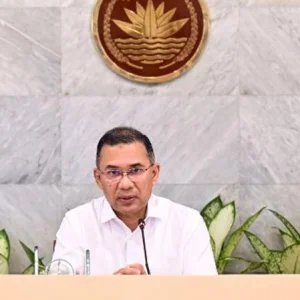
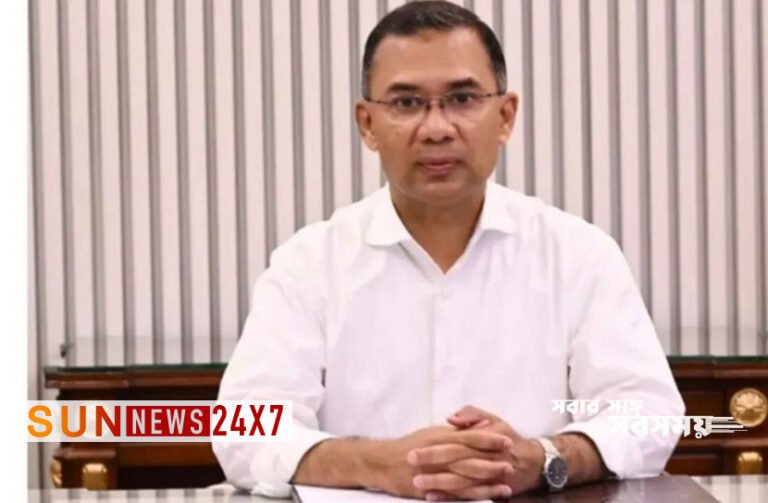
Rashed Al Mahmud Titumir. Photo: Courtesy
“>

Rashed Al Mahmud Titumir. Photo: Courtesy
Prime Minister’s Adviser on the Ministries of Finance and Planning Prof Rashed Al Mahmud Titumir yesterday (2 August) called for a nationwide social movement to promote renewable energy, expand local manufacturing of solar technologies and ensure Bangladesh’s long-term energy security.
Speaking at a seminar titled “Distributed Renewable Energy: The Future Solar Solution for Bangladesh” at the Economic Reporters’ Forum (ERF) auditorium in Dhaka, Titumir said Bangladesh must move beyond policy commitments and encourage broader public participation to make clean energy adoption a national movement.
“The first task is to create demand through a social movement. Once citizens articulate that demand, the market will naturally respond with supply,” he said.

Titumir said Bangladesh’s history of successful public initiatives, including mass literacy campaigns, canal excavation programmes and the Expanded Programme on Immunisation (EPI), showed that collective action could drive major national transformations.
He urged civil society organisations, NGOs and microfinance institutions to lead campaigns for renewable energy adoption, saying access to clean energy should be treated as a right for every household.
The adviser said renewable energy could reduce household expenses, increase savings and create new investment opportunities, helping families move away from cycles of poverty.
Highlighting Bangladesh’s growing dependence on imported fuel, Titumir stressed the need for household-level renewable solutions, including solar-powered cooking systems, to reduce pressure on gas supplies and lower liquefied petroleum gas (LPG) imports.
He also emphasised the need to build a domestic manufacturing industry for renewable energy equipment, including photovoltaic (PV) panels, batteries and inverters.
“Local manufacturing will strengthen supply chains, create jobs, promote technological innovation and make renewable energy more affordable for consumers,” he said.
Titumir said Bangladesh has the market potential to develop a competitive renewable energy manufacturing sector and cited Pakistan’s rapid expansion of distributed solar systems as an example of what could be achieved through government support and private investment.
Calling for a balanced energy mix, he said Bangladesh should gradually increase renewable energy’s share while continuing to use conventional energy sources.
“We are not saying conventional energy will disappear overnight. Rather, Bangladesh needs a diversified energy mix in which renewable energy assumes a progressively larger share,” he said.
He said renewable energy would reduce import dependence and help Bangladesh manage global uncertainties caused by geopolitical conflicts, supply disruptions and climate challenges.
The adviser also urged financial institutions to expand renewable energy financing and said policy support, including tax and duty incentives, would encourage investment in solar technologies.
The seminar was jointly organised by ERF and the Distributed Renewable Energy Platform (DREP). During the event, the Centre for Policy Dialogue (CPD) launched its “Renewables in Bangladesh” website as an information platform for the sector.
About The Author