Highlights:
- Government identified 18 major ADP implementation challenges
- Weak feasibility studies cause delays, higher costs, project revisions
- Poor economic analysis wastes resources and weakens future planning
- Funding delays and poor planning hinder project implementation
- IMED proposed stricter revision, staffing and project management rules
- Climate screening and stronger accountability recommended for all projects
The government has identified 18 major challenges hindering the timely, cost-effective, and quality implementation of projects under the Annual Development Programme (ADP), and proposed a series of policy recommendations to address them.
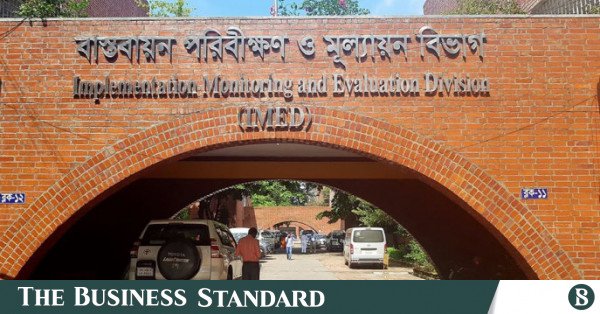
The challenges include weak feasibility studies, inadequate economic analysis, poor implementation planning and shortcomings in project site selection, according to a report presented by the Implementation Monitoring and Evaluation Division (IMED).

The IMED said the recommendations were aimed at reducing cost and time overruns, improving efficiency, and strengthening accountability in project implementation.
The report was presented at a meeting chaired by the finance minister at the NEC Conference Room in Sher-e-Bangla Nagar yesterday.
Weak studies, economic analysis, financial plans
The report said that although feasibility in many projects proceed without comprehensive assessments, independent consultants or adequate quality reviews. As a result, design changes during implementation lead to higher costs, delays and repeated project revisions.
IMED recommended mandatory comprehensive feasibility studies in line with national and international standards, subject to independent technical review.
The report identified weak economic analysis and lack of post-implementation evaluations as another key challenge, saying many projects are approved without credible assessments, resulting in inefficient use of public resources and limited lessons for future planning.
IMED suggested using realistic assumptions and internationally recognised methods for economic analysis, alongside mandatory economic evaluations after project completion.
The IMED also identified weak financing plans and poor budget alignment as a major challenge, saying many projects are approved before funding sources are secured.
Officials said the problem is particularly common in projects financed by bilateral development partners. The Dhaka-Ashulia Expressway project, for instance, signed its loan agreement with China three years after receiving Ecnec approval.
The IMED identified poor project site selection as a recurring problem. It recommended evidence-based feasibility studies and technical assessments before project approval.
IMED also flagged coordination gaps in cluster or umbrella projects, recommending the designation of a lead ministry at the outset.
Delay in proposals, unaligned manpower
The report said project proposals (DPPs) are often delayed even after loan or grant commitments are secured, with some projects requiring four or five revisions.
The IMED recommended capping project revisions at two and allowing no more than two time extensions without increasing project costs.
It also found that inadequate staffing slows implementation, recommending that necessary posts be created under the revenue budget at least six months before project implementation and filled within three months.
Other recommendations
IMED also proposed making climate risk screening and climate impact assessments mandatory for all development projects.
Officials said many routine activities that should be funded through the revenue budget are instead implemented as development projects to secure additional financial benefits.
The report recommended ending the practice of financing regular government functions through development projects.
It also found that rules limiting officials to serving as project director for a single project are routinely ignored. IMED recommended enforcing the one-project-one-director policy, ending additional-charge appointments, and creating a pool of qualified project directors for assignment based on project complexity.
The agency further recommended making Result-Based Management mandatory for all projects, requiring project completion reports within three months of completion, and setting realistic implementation timelines that reflect the project approval process.
About The Author