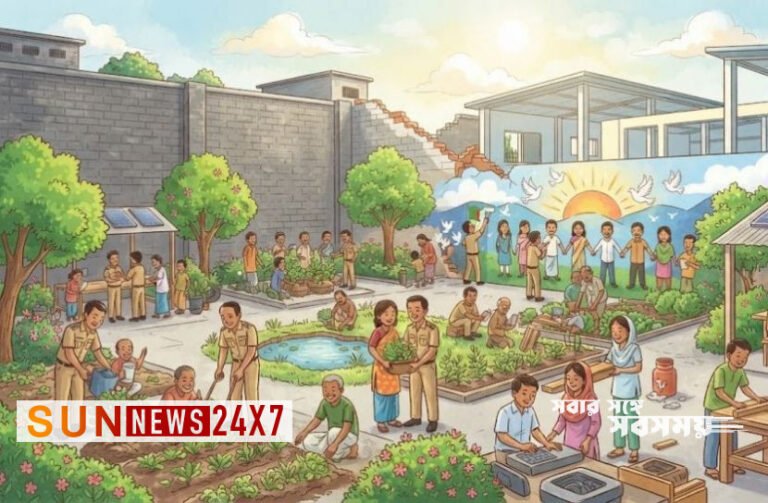
Tk200 crore earmarked for bringing new educational institutions under the MPO system.
Infograph: TBS
“>

Infograph: TBS
For nearly a decade, Anjan Chakraborty has walked into his classroom every day, taught students and checked exam papers but without receiving a single salary.
Since joining Bhoyrab Adarsha College in Jashore’s Abhaynagar in 2015, Anjan has continued teaching as a non-MPO (monthly pay order) teacher, while struggling to support his family without a regular income.
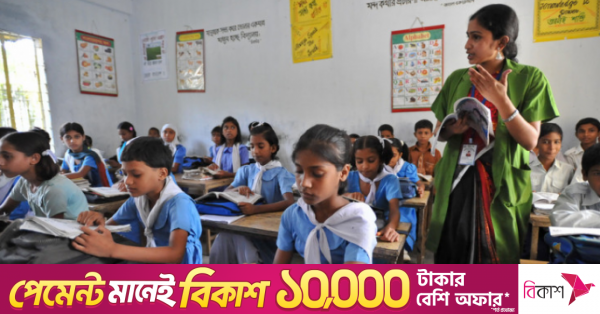
His story reflects the reality of thousands of teachers at non-MPO institutions across Bangladesh, who continue academic activities year after year without salaries or allowances.
Teachers of non-government institutions need to get listed under the MPO system to receive basic salary and allowances from the government. Teachers, who are not listed in the system, have to depend on small earnings from the institutions and private tutoring or alternative jobs to survive, raising concerns that prolonged financial insecurity among teachers is affecting both their morale and the quality of education.

Now around 40 and the father of a 14-month-old child, Anjan says managing household expenses has become increasingly difficult.
“I have been working here for years without receiving any salary. With a young child and a family to support, it has become increasingly difficult to make ends meet,” he said.
Anjan also rejected the perception that non-MPO teachers are generally less qualified.
“Many people think non-MPO teachers are less skilled, but that is not true in most cases. Before joining this college, I worked for a reputed English newspaper and a private language institute,” he said.
Years of waiting for MPO inclusion have left him uncertain about his future.
“I have stopped dreaming about becoming an MPO-listed teacher. It feels like a carrot being shown in front of us but never within reach. Now I see only an uncertain and frustrating future,” he said.
Other non-MPO teachers are facing similar struggles. Sunil Biswas, a teacher at Noapara Degree College, has been working without a regular salary for nearly two decades.
“I have been teaching without pay for two decades. There has been no improvement in our inhumane living conditions. The government does not pay attention to us,” he said.
A teacher at a non-MPO college in Mymensingh, requesting anonymity, said surviving without a salary has become increasingly difficult amid rising living costs.
“When teachers have to protest for their rightful salaries despite being in a respected profession, will anyone be interested in joining this career?” the teacher said.
‘Students suffer the most’
The financial hardship of teachers is also raising concerns about the quality of education at non-MPO institutions.
Professor SM Hafizur Rahman of the Institute of Education and Research said institutions seeking MPO status should be assessed not only against government criteria but also based on their necessity and capacity.
“Many institutions are established without adequate resources. Many teachers come to teach by making sacrifices. Naturally, the quality of education declines when teachers do not receive salaries. Students suffer the most,” he said.
He said the government should conduct research into the condition and necessity of educational institutions before deciding on MPO inclusion.
Institutions with genuine educational needs should be prioritised, while measures should be taken to prevent unnecessary institutions from being established, he added.
Syed Akhtaruzzaman, chairman of the Dhaka Board of Secondary and Higher Secondary Education, described prolonged unpaid teaching as inhumane.
“Delays in MPO inclusion should not happen. The process requires state approval, but teaching without salaries is inhumane,” he said.
Most private institutions remain non-MPO
According to the Bangladesh Bureau of Statistics’ Private Educational Institution Survey 2024, Bangladesh has 92,391 private educational institutions.
Of these, 26,104 are MPO-listed, while 66,287 remain outside the MPO system.
The figure includes institutions that may not be eligible for MPO status, including kindergartens, NGO-run institutions, Ebtedayi and Qawmi madrasas, technical institutions and other private educational establishments.
The survey found that private educational institutions employed 10.88 lakh teachers in the last quarter of 2023, up 24,000 from the previous year.
The country also has 6,587 coaching centres, around 65% of which are privately owned.
Education gets record allocation
Education has received Tk1,36,646 crore in the FY2026-27 budget, the highest allocation for the sector in the country’s largest-ever national budget.
The allocation is equivalent to 2% of GDP. The budget also includes Tk200 crore for bringing new educational institutions under the MPO system.
However, there is still no clear decision on how the MPO allocation will be implemented or whether the previous MPO inclusion process will be retained.
Syed AZ Morshed Ali, joint secretary of the Private Secondary-3 section of the Secondary and Higher Education Division of the Education Ministry, told The Business Standard that there was no update on the matter.
“At present, we have no information regarding MPO inclusion. The ministry has not taken any new decision yet. We also do not know whether the decisions taken by the previous government will be cancelled or retained,” he said.
MPO expansion remains uncertain
The demand for MPO inclusion from non-MPO institutions has continued for years.
In the last major expansion in 2022, 2,716 private educational institutions were brought under the MPO system. Of these, 2,051 were under the Secondary and Higher Education Division and 665 under the Technical and Madrasa Education Division.
In February 2026, the Education Ministry began processing the inclusion of 1,719 private schools and colleges in the first phase of another MPO expansion.
The ministry said the institutions had been evaluated through automated software and that it had sought the Finance Division’s consent for the process.
But SM Moslem Uddin, assistant director of the Secondary Wing of the Directorate of Secondary and Higher Education, told The Business Standard that no official decision had been received after the election period.
“The interim government started this process. We have not received any decision on whether it will be cancelled or implemented,” he said.
For teachers who have spent years outside the MPO system, simply starting the inclusion process will not resolve their problems.
They want institutions with genuine educational needs and active academic programmes to be assessed quickly and brought under the MPO system.
About The Author