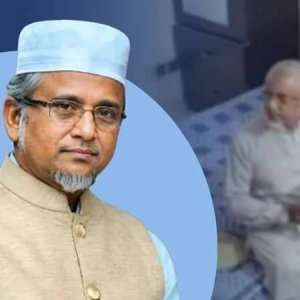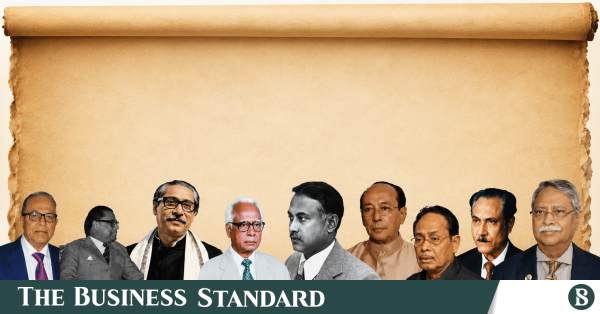
Under the Constitution, the speaker serves as acting president if the post becomes vacant, while the president may resign by writing to the speaker.
Illustration: Duniya Jahan/ TBS Creative
“>

Illustration: Duniya Jahan/ TBS Creative
With the resignation of Bangladesh’s 22nd president, Mohammed Shahabuddin, the country’s highest constitutional office has fallen vacant. Under the Constitution, the Speaker of the National Parliament will serve as acting president until a new president assumes office.
At the same time, the constitutional process for electing a new president will begin.
Under Article 50(3) of the Constitution, the president resigns by submitting a signed letter addressed to the speaker. Article 54 states that if the office of the president falls vacant or the president is unable to perform the duties of the office, the speaker shall discharge the functions of the president until a new president assumes office.

Following the vacancy, the Election Commission’s (EC) most important responsibility is to announce the schedule for the presidential election. According to Article 123(1) of the Constitution, the election must be completed within 90 days from the date the office becomes vacant.
Although the Constitution does not specify a deadline for announcing the election schedule, the EC will determine a timetable to ensure that the entire process — including nomination submission, scrutiny, withdrawal of candidacy and, if necessary, voting — is completed within the 90-day period.
Under the Presidential Election Act of 1991 and the Presidential Election Rules, the EC will approve the election schedule at a meeting. The chief election commissioner (CEC) will then publish the schedule in the official gazette.

The schedule will include the deadline for submitting nomination papers, the date for scrutiny, the last date for withdrawal of candidature and, if required, the date, time, and venue for voting.
The CEC will also serve as the returning officer for the presidential election.
Who can become president?
Under Article 48(4) of the Constitution, a presidential candidate must: Be a citizen of Bangladesh, be at least 35 years old, and be qualified to be elected as a member of parliament (MP).
The same individual may serve as president for a maximum of two terms.
Proposer and seconder for nomination
Under the Presidential Election Act, a candidate’s nomination paper must be proposed by an MP and seconded by another. An MP cannot act as proposer or seconder for more than one candidate.
After the nomination papers are submitted within the stipulated timeframe, the EC will scrutinise them and publish the list of valid candidates. Candidates will then have the opportunity to withdraw their nominations.
Who will vote?
Ordinary citizens do not vote in the presidential election. Only the elected members of the National Parliament are eligible to vote. In other words, Bangladesh’s president is elected by the members of parliament.
How is the vote held?
If there is more than one valid candidate, voting will be held by secret ballot at the parliament. The candidate who secures a majority of the valid votes cast by the MPs present will be elected president.
However, if only one valid candidate remains after scrutiny, the returning officer will declare that candidate elected unopposed, without holding a vote.
Mohammed Shahabuddin was elected president in this manner in 2023.
About The Author