The existing tariff rate will remain in force after midnight, although under a different name, says Commerce Minister Khandakar Abdul Muktadir.
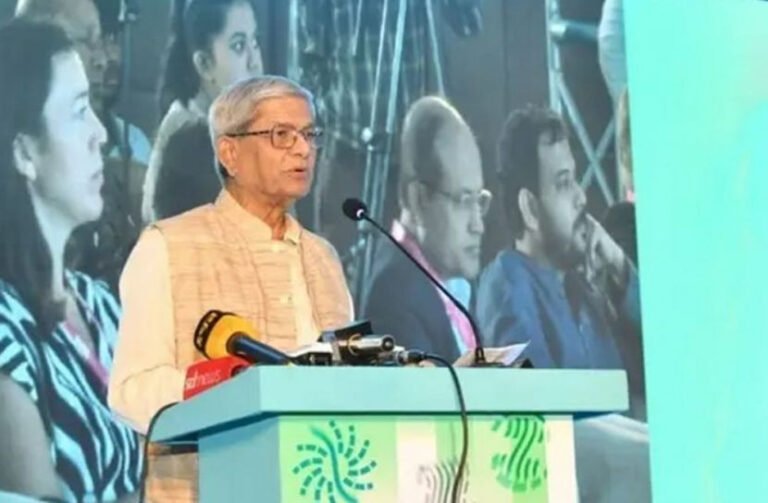
A file photo of Minister Khandakar Abdul Muktadir. Photo: Collected
“>

A file photo of Minister Khandakar Abdul Muktadir. Photo: Collected
Commerce Minister Khandakar Abdul Muktadir today (24 July) said the United States has not imposed a new tariff on Bangladeshi goods but has replaced an existing one.
Speaking to reporters in Sylhet regarding the new 10% US tariff, the minister said there has been no real change in the tariff regime, adding that the previous US tariff is expiring within 150 days due to legal requirements and the new tariff will take effect afterwards.
“It is not a new tariff; it is a replacement,” he said, stating that the existing tariff rate will remain in force after midnight, although under a different name.

The minister, speaking after inaugurating a daylong free medical camp, family planning, maternal and child healthcare, and eye care programme for tea workers at Sylhet Government Pilot High School, said the government has no immediate plans to raise domestic fuel prices despite higher global oil prices.
Commerce Minister Khandakar Abdul Muktadir speaks at an event in Sylhet on 24 July 2026. Photo: TBS
“>

Commerce Minister Khandakar Abdul Muktadir speaks at an event in Sylhet on 24 July 2026. Photo: TBS
Earlier at the event, he said the government is prioritising education and healthcare services in tea garden areas, adding that medical camps will help workers access healthcare closer to their communities.
The Trump administration today imposed new tariffs of 10% and 12.5% on goods from 60 trading partners, including Bangladesh, over allegations of lax enforcement of forced labour bans, just as a temporary 10% global tariff expired, reports Reuters.
The move is the White House’s latest effort to restore President Donald Trump’s vision of a near-global tariff after the US Supreme Court in February struck down his “reciprocal” duties of 10% to 50% imposed under a national emergencies law to try to shrink the US trade deficit.
The US imposed a 10% duty on goods of Argentina, Bangladesh, Britain, Cambodia, Canada, Ecuador, El Salvador, Guatemala, Honduras, India, Indonesia, Jordan, Malaysia, Mexico, Pakistan, Sri Lanka, Trinidad and Tobago.
The European Union, Taiwan, Japan, South Korea and Switzerland were assigned rates that, combined with pre-existing most-favoured-nation tariff rates, totalled 10% or 12.5%.
The other 38 countries were assigned a 12.5% rate. These include Vietnam, which issued a new decree this week that sets out more detailed rules banning imports of goods made with forced labour, and China – accused by the US of detaining Uyghur minorities in work camps, which Beijing denies.
About The Author