Lenders will put representative in the board of City group to oversee financial management if the syndicated approach is finalised.
Infographics: TBS
“>

Infographics: TBS
Thirty-six banks, including two foreign lenders, are considering a joint debt restructuring plan for City Group, one of Bangladesh’s largest conglomerates, as the company struggles with more than Tk26,600 crore in outstanding loans.
The banks are scheduled to meet at Hotel Sonargaon today to finalise a syndicated restructuring framework aimed at keeping the group operational and avoiding a large provisioning burden on the banking sector. Under the proposal, the loans would be restructured and repayment periods extended instead of immediately classifying the exposures as defaulted, according to banking sources.
City Group’s loans have not yet been classified. Bankers say they are waiting for the outcome of the meeting before making a decision.
Founded more than five decades ago, the group generates around Tk32,000 crore in annual revenue and employs about 25,000 people.

What is needed now is reliable energy supply, adequate working capital support, and consistent policy implementation.
Md Hasan, City Group
Banks will also have representatives on City Group’s board to oversee transparency – where money is going, how it is being spent, and what sales are being generated.
If all 36 banks agree, they will nominate two or three representatives to sit on the board. This follows global restructuring models and waterfall mechanisms.
There will be a central escrow account owned collectively by the 36 banks. All cash flows will go into that account under a waterfall mechanism.
For example, if goods worth Tk100 are sold, the amount will first be deposited into the escrow account controlled by the syndicate.
From that Tk100, perhaps Tk80 will be returned to City Group as working capital, while Tk20 will be allocated towards loan repayment.
The initiative was taken by Mashrur Arefin, chairman of Association of Bankers, Bangladesh (ABB) and managing director of City Bank; Bangladesh Bank Governor Mostaqur Rahman also aligned with the proposed solutions.
When asked, Mashrur Arefin declined to comment on this matter.
Earlier in May, City Group sought policy support from the central bank after it fell in severe financial pressure caused by forex loss, unavailability of working capital amid banking sector crisis and six stalled projects due to delay in gas connection.
The governor instructed banks to come up with a solution to let the group keep operating to avoid further provision burden.
The recovery roadmap
Banks will seek special approval from Bangladesh Bank to avoid classification till December this year or beyond for continuation of facilities and save banks from loan provision burden, according to bankers wishing not to be named.
According to the proposed plan, an independent monitoring committee will also be established. External restructuring consultants will be involved.
The strategic roadmap includes selling non-core businesses and assets as some of these assets have become a burden on the balance sheet because they are not generating returns.
The group’s economic zones and high-tech park projects may also be sold. Bankers told The Business Standard that they will look for buyers. Buyers may ask for certain assurances from banks, and we will evaluate those requests.
This is the first time banks are collectively restructuring a stressed corporate account through an escrow arrangement and coordinated oversight, they said.
“We do not know what the final outcome will be, but this is the approach we are taking,” said a top executive of a private commercial bank.
“Everyone is now trying to make it work. If a single bank acts alone, it could suffer. But if all banks work together, the chances improve,” he said.
How banking sector crisis, failure in utility connection put City group in financial strain
The problem started after the death of City group’s founding chairman Fazlur Rahman in 2023. The lack of unified control in management weakened the group.
On the other hand, the ongoing banking sector crisis including capital shortfall and merger made most banks unable to provide working capital to the group which affected import of raw materials causing drastic sales drop to less than one third.
Moreover, the group incurred substantial foreign exchange loss and devaluation also reduced its LC (Letter of Credit) limit.
When speaking with The Business Standard, Fazlur Rahman’s son Md Hasan – the managing director of the group, attributed the group’s financial stress primarily to foreign exchange losses, shrinking bank support and the sharp depreciation of the taka, which significantly reduced its import capacity. “Since 2022, we have incurred more than Tk2,500 crore in foreign exchange losses, which significantly affected us,” he said.
He said the banking sector crisis further constrained operations as several banks reduced or withdrew support, while foreign suppliers became reluctant to accept letters of credit issued by some local lenders. According to him, the group’s purchasing power fell by about $900 million as the taka weakened and credit limits shrank. “In effect, we lost around $900 million in import capacity.”
When the dollar appreciated and banks reduced lending limits, the group’s import capacity fell dramatically, he said. “The situation worsened after several banks effectively became unable to support large corporate clients. Banks such as EXIM Bank, Islami Bank, and Al-Arafah no longer provided the same level of support despite us repaying substantial amounts.”
“For example, we had a revolving credit limit of about Tk1,400 crore with Islami Bank. After 5 August, that facility effectively collapsed. Foreign suppliers and international banks were unwilling to accept letters of credit (LCs) issued by some local banks because confidence in those institutions had deteriorated.”
“We also repaid around Tk1,500 crore to EXIM Bank, but the support we previously received was no longer available. In many cases, foreign banks refused to confirm LCs from certain Bangladeshi banks. As a result, even if a facility technically existed on paper, it was of little practical value because suppliers would not accept it.”
“At one point, we had about Tk 25,000 crore in available banking limits. When the exchange rate was around Tk 85 per dollar, that translated into roughly $3 billion of purchasing power. At Tk 125 per dollar, that purchasing power dropped to about $2.1 billion. In effect, we lost around $900 million in import capacity.”
At present, only around 10–12 banks are capable of providing meaningful support, and even they face limitations, he said.
“We have explored alternatives to bank financing, including issuing a zero-coupon bond. We applied for a bond worth approximately Tk 1,300 crore, but approval took around 14 months. Such delays make financial planning extremely difficult. By the time approval arrives, market conditions have changed and interest rates have increased significantly.”
“Initially, we expected funding costs around 10%, but by the time the bond was approved, market rates had risen to 12–13%. Since government securities were offering around 12–12.5%, a corporate bond would need to offer approximately 15% to attract investors. For businesses dealing in essential commodities, such financing costs are not sustainable.”
“Our biggest challenge today is working capital.”
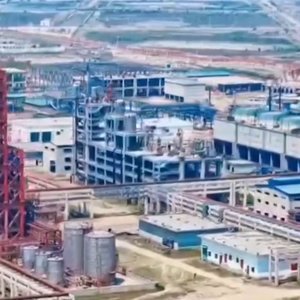
Hasan said delayed gas connections for six industrial projects in Munshiganj have worsened the group’s difficulties, leaving investments worth around Tk14,000 crore idle while financing costs continue to accumulate. “On average we are losing around Tk5 crore per day due to interest, fixed costs, salaries, and other expenses associated with projects that are ready but not operational.”
“We also paid around Tk150 crore as security deposits and invested heavily in gas infrastructure ourselves. Ideally, the government should have built much of that infrastructure. We constructed pipelines and related facilities at our own expense in order to accelerate the process, but we still have not received gas,” the MD added.
He said, “We planned these investments when government incentives, including tax holidays in economic zones, were available. After making investments, policy changes excluded sectors such as sugar, edible oil, cement, and steel from some of those benefits. Such policy inconsistency creates uncertainty for investors.
“We also have foreign investors involved in these projects. A UK-based partner owns 40% stakes in two joint ventures, including the cement and paper projects. These investors entered Bangladesh based on commitments and expectations. After waiting for years without operations commencing, they are understandably discussing possible exit options.”
The group has requested restructuring from banks, but restructuring alone is not a solution, Hasan said. “Factories must operate. Without working capital and energy supply, repayment becomes impossible regardless of restructuring.”
The group is now considering selling non-core assets, such as land and other non-revenue-generating assets, to raise funds internally. “However, because our businesses are import-dependent, bank support remains essential.”
“The concern is that if large industrial groups face severe stress or default, the impact extends beyond the companies themselves. It affects Bangladesh’s banking sector, international reputation, sovereign risk perception, and the cost of future financing. When country risk increases, foreign suppliers and lenders charge higher premiums, making imports more expensive and ultimately increasing costs for consumers,” the MD added.
“Overall, our message is simple: the projects are largely complete, the factories are ready, the market exists, and investors are willing. What is needed now is reliable energy supply, adequate working capital support, and consistent policy implementation,” he concluded.
About The Author