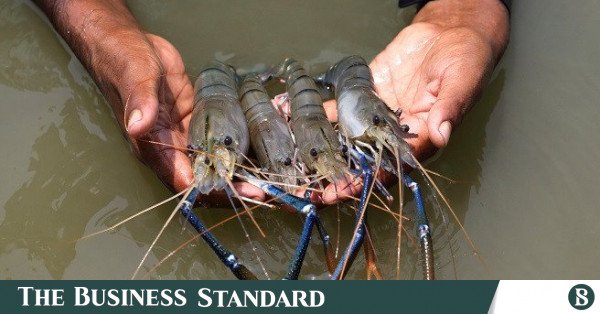
The ambitious target comes as shrimp export earnings have fallen to below $300 million in the fiscal 2024-25 from nearly $1 billion in the nineties, underscoring the need for structural reforms in a sector widely regarded as the country’s “White Gold.”
Photo: Collected
“>

Photo: Collected
Highlights:
- Bangladesh targets $3 billion shrimp exports by 2030
- Shrimp exports fell below $300 million from $1 billion
- Dedicated Shrimp Economic Zones proposed to boost investment
- Modern aquaculture technologies central to industry revival plans
- Low productivity remains major obstacle versus global competitors
- High costs and infrastructure gaps undermine export competitiveness
Bangladesh is aiming to increase shrimp export earnings to $3 billion by 2030 by modernising production, adopting advanced aquaculture technologies and establishing dedicated Shrimp Economic Zones to revive a sector that was once the country’s second-largest export earner after garments.
The ambitious target comes as shrimp export earnings have fallen to below $300 million in the fiscal 2024-25 from nearly $1 billion in the nineties, underscoring the need for structural reforms in a sector widely regarded as the country’s “White Gold.”

Under the theme “Unlocking Investment Potentials for Sustainable Prosperity of Bangladesh’s Shrimp Industry,” the Maheshkhali Integrated Development Authority (Mida) recently presented a strategy paper to industry stakeholders, outlining a roadmap to transform the sector through technology-driven farming and integrated investment.
Infograph: TBS
“>

Infograph: TBS
According to the paper, the shrimp industry supports more than three lakh direct jobs, exports to more than 60 countries and remains a significant source of foreign exchange earnings. Bangladesh has approximately 2,62,000 hectares under shrimp cultivation, making it the world’s fifth-largest shrimp farming base.
From export success to prolonged decline
Bangladesh’s shrimp export boom lasted from the late 1980s until the mid-2000s, when frozen shrimp emerged as the country’s second-largest export sector after ready-made garments, driven largely by strong demand for Black Tiger shrimp in the European Union, the United States and Japan.
However, industry stakeholders say the sector has been in steady decline since 2006 because of environmental degradation, shrinking water bodies caused by urbanisation, excessive use of fertilisers and pesticides, and the delayed adoption of high-yield Vannamei shrimp farming compared with competing countries.
While frozen fish and shrimp exports once approached $1 billion, export earnings stood at $448.56 million in FY16 before declining further to $296.29 million in FY25.
Despite the downturn, shrimp remains the dominant export product within Bangladesh’s fisheries sector, accounting for around 76% of total export earnings from frozen fish and shrimp during FY25 and offering significant potential for export diversification beyond garments.
Industry representatives identify supply shortages, environmental degradation, compliance challenges and intensifying global competition as the principal reasons behind the sector’s decline.
Technology and value addition at centre of revival plan
Mida Member for Port, Fisheries and Marine Affairs Tanzim Faruq said Bangladesh should adopt best practices from China, Thailand and Vietnam by moving from traditional farming methods to indoor and intensive aquaculture systems.
He said shifting from raw shrimp exports to value-added products and stronger branding could increase export earnings per kilogram by five times or more.
Faruq said discussions are under way on establishing dedicated Shrimp Economic Zones following proposals from industry stakeholders, with another consultation expected in June involving businesses and other participants in the sector.
The proposed zones would integrate hatcheries, feed mills, laboratories and farms while facilitating traceability requirements increasingly demanded by international buyers, particularly in Europe.
He added that adopting technologies such as Recirculating Aquaculture Systems and Biofloc Technology, widely used in China, Thailand and Vietnam, could raise post-larvae survival rates to more than 85%.
Mida has also identified investment opportunities across the value chain, including hatcheries, feed mills, indoor smart farms, processing plants, cold storage facilities, logistics infrastructure and agritech solutions.
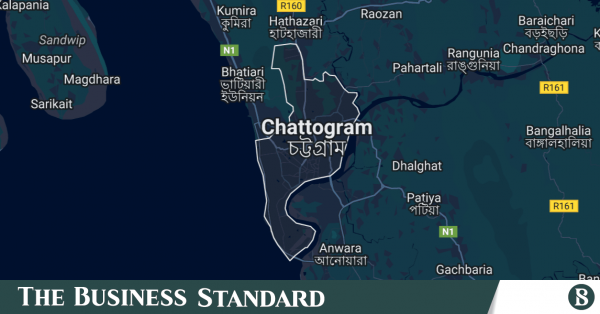
Recent stakeholder meetings organised by Mida have proposed locating Shrimp Economic Zones in Khulna, Satkhira, Bagerhat, Cox’s Bazar, Maheshkhali, Chakaria and Teknaf, with plans to introduce controlled Vannamei farming, real-time monitoring and electronic traceability systems.
Productivity gap remains a major obstacle
According to the Department of Fisheries, Bangladesh produced 2,99,000 tonnes of shrimp in FY25, with average yields of only around 400kg per hectare.
Mida data indicate that intensive shrimp farms in Ecuador produce approximately 6,800kg per hectare, while comparable figures stand at around 5,500kg in India and 4,500kg in Vietnam under semi-intensive production systems.
Md Tariqul Islam Zaheer, acting president of the Bangladesh Frozen Foods Exporters Association and managing director of Achia Sea Foods Limited, said Bangladesh continues to rely largely on traditional farming methods, resulting in significantly lower productivity than competing countries.
He noted that Vannamei shrimp now accounts for more than 80% of the global market because of its higher productivity, lower production costs and reduced risks, adding that industry participants had long urged the government to permit its cultivation.
Bangladesh Frozen Foods Exporters Association Adviser Syed M Ishtiaq said commercial-scale modern shrimp farming remained limited, leading to low productivity and difficulties in meeting international compliance standards.
He said Bangladesh currently cultivates shrimp on about 2,62,000 hectares and estimated that modernising at least 30,000 hectares could enable the country to move towards annual shrimp exports worth between $2 billion and $2.5 billion.
According to IMARC Group, the global shrimp market was valued at $74.7 billion in 2025 and is projected to reach $106.1 billion by 2031.
High costs and infrastructure bottlenecks
Industry representatives say high feed prices, expensive electricity, shortages of quality post-larvae and inadequate infrastructure continue to constrain production.
Zaheer also said domestic shrimp prices have risen sharply, reducing export competitiveness because processors must purchase shrimp at prices significantly above prevailing international market rates before incurring additional processing and shipping costs.
Experts also point to shallow ponds, weak transport infrastructure and heavy dependence on imported feed as major constraints.
Ishtiaq said traditional ponds are typically only one to one-and-a-half feet deep, compared with the recommended depth of four to five feet, making shrimp more vulnerable to heat stress and viral diseases.
He added that transporting post-larvae by road from Cox’s Bazar to the Khulna region takes 10 to 12 hours, increasing stress and mortality rates, while previous air transport services are no longer available.
Bangladesh Investment Development Authority and Mida Executive Chairman Ashik Chowdhury said transforming shrimp into a modern industry would require greater emphasis on value-added products, branding and technology-driven production.
About The Author