Highlights:
- Move follows high-level meeting ahead of 11 June budget
- Policy debate continues over revenue needs vs inequality and complexity concerns
- Officials say directive from PM is to avoid policies that create public controversy
- Past black money whitening scheme legalised over Tk20,000 crore but faced heavy criticism
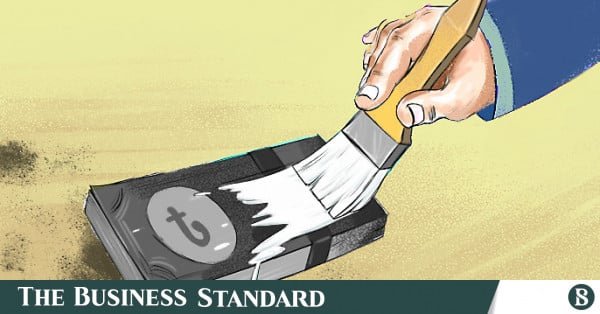
The government is moving away from its widely discussed plan to introduce a wealth tax. It may also abandon its proposal to allow the whitening of undisclosed money with indemnity in sectors such as real estate.
In addition, plans to impose taxes on motorcycle owners and battery-powered auto-rickshaws may also be dropped. Instead, the government is considering a one-time tax on higher-capacity motorcycles.

According to finance ministry sources, the decisions were made at a meeting yesterday (3 June) attended by the prime minister, the finance minister and the chairman of the National Board of Revenue (NBR). The finance minister is expected to place the budget proposal in parliament on 11 June.
Speaking to The Business Standard on condition of anonymity, a senior NBR official said, “The prime minister has instructed us not to pursue policies that could create controversy or place additional burdens on ordinary people. As part of that directive, plans to provide indemnity for investing undisclosed money and to impose broad-based taxes on motorcycles and battery-powered auto-rickshaws have been shelved.
“Regarding the wealth tax, the prime minister has asked for an impact analysis before any proposal is finalised. As a result, it is unlikely to be included in the upcoming budget.”
He added, “To avoid placing a burden on ordinary people, there may not be a tax on all motorcycles. At the same time, the government does not want to face criticism by allowing black money to be invested with indemnity.”
Earlier, NBR Chairman Abdur Rahman Khan had indicated that a wealth tax would be introduced in this year’s budget. Sources involved in the budget process had also said that the proposal received preliminary approval at a meeting chaired by the prime minister in May.
Sources further said the government had considered allowing undisclosed money to be invested in sectors such as real estate to stimulate economic activity and boost revenue collection.
However, after reports emerged about plans to tax motorcycles, a group of bikers staged a protest in front of the NBR headquarters in Agargaon. Economists and several civil society platforms also voiced opposition to proposals that would allow black money to be invested with indemnity.
The government has now decided to retreat from those plans.
Dr Syed Md Aminul Karim, former NBR member of the Income Tax Policy Wing, believes it would not be justified to abandon the wealth tax proposal.
He told TBS, “A wealth tax could have been a useful tool both for raising revenue and reducing inequality. The government may be stepping back because of concerns over public reaction.”
He also said there should be a mechanism to bring the large volume of money outside the formal economy into productive investment.
In his view, the proposed taxes on motorcycles and battery-powered auto-rickshaws were also reasonable.
However, Snehasish Barua, an income tax expert and managing director of SMAC Advisory Limited, believes that implementing a wealth tax could create inequality, as those who declare their assets would bear the tax burden, while those who conceal assets might escape taxation altogether.
He also warned that valuing assets for wealth tax purposes could be highly complex and may trigger a large number of legal disputes and court cases.
“For that reason, it would not be prudent to implement such a tax without adequate preparation,” he said.
Barua added that the government should also examine why countries such as India eventually abandoned wealth taxes after introducing them. “The experiences of those countries and the reasons behind their policy reversals should be taken into consideration before making any decision,” he said.
At present, individuals with assets worth more than Tk3 crore are required to pay a surcharge on their income tax at prescribed rates. The NBR had planned to introduce a direct tax on wealth itself, at rates of up to 1% of asset value.
Meanwhile, the existing system already allows undisclosed money to be invested after payment of the applicable tax plus a 10% penalty. However, agencies such as the Anti-Corruption Commission can still question the source of those funds.
The government had initially considered removing the authority of any agency to question the source of such money.
In FY2020-21, the government allowed black money to be invested in any sector by paying a flat 10% tax and granted indemnity from further scrutiny.
More than Tk20 thousand crore was legalised under the scheme that year, generating over Tk2 thousand crore in tax revenue for the government. The policy, however, drew widespread criticism.
About The Author