Bangladesh Foreign Minister Khalilur Rahman and Cyprus’ Special Envoy for Multilateralism Ambassador Andreas Kakouris are contesting to lead UNGA for a one-year term.
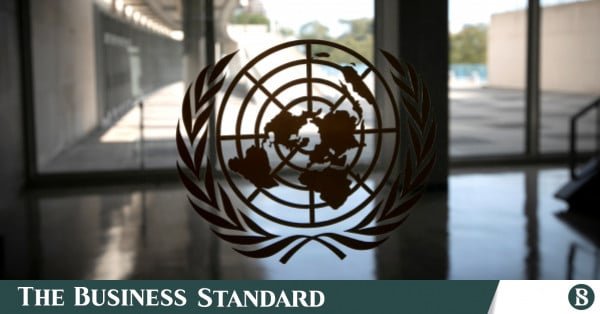
FILE PHOTO: The United Nations logo is seen on a window in an empty hallway at United Nations headquarters during the 75th annual U.N. General Assembly high-level debate, which is being held mostly virtually due to the coronavirus disease (COVID-19) pandemic in New York, U.S., September 21, 2020. REUTERS/Mike Segar/File Photo
“>

FILE PHOTO: The United Nations logo is seen on a window in an empty hallway at United Nations headquarters during the 75th annual U.N. General Assembly high-level debate, which is being held mostly virtually due to the coronavirus disease (COVID-19) pandemic in New York, U.S., September 21, 2020. REUTERS/Mike Segar/File Photo
Bangladesh and Cyprus will vie for the presidency of the 81st session of the United Nations General Assembly (UNGA) in a closely watched election tomorrow (2 June).
Bangladesh Foreign Minister Khalilur Rahman and Cyprus’ Special Envoy for Multilateralism Ambassador Andreas Kakouris are contesting to lead the 193-member General Assembly for a one-year term. The 81st session will begin in September.
The successful candidate will succeed current UN General Assembly President Annalena Baerbock, the former German foreign minister.

Under the established regional rotation system, the president of the 81st session of the UNGA will be elected from the Asia-Pacific Group.
If elected, Khalilur would become the second Bangladeshi to lead the UN General Assembly after former diplomat Humayun Rasheed Choudhury, who served as president of the 41st session in 1986.
Khalilur was sworn in as Bangladesh’s foreign minister in February this year. Before that, he served as national security adviser and high representative for the Rohingya issue in the government led by Muhammad Yunus.
In his vision statement, Khalilur outlined six priority areas for his presidency: “Silence the Guns, Amplify the Voices”, “No One Left Behind, No Country Left Out”, “Our Planet, Our Pact”, “Rights and Protection – Freedom from Fear and Want”, “Innovation with Inclusion”, and “We the Peoples – Reimagined”.
“As a candidate from the Global South, I carry the aspirations of developing countries, but as president, I will be everyone’s president – acting without fear or favour and serving the interests of the entire membership,” he said.
Khalilur said the 81st session would feature several “milestone events that will test our collective resolve”, ranging from addressing the threat of sea-level rise and strengthening pandemic preparedness to advancing the right to development and nuclear disarmament.
He said that, if elected president of the General Assembly, he would dedicate himself to rebuilding trust, nurturing consensus and opening space for good-faith negotiations that would lead to outcomes owned by all.
In his vision statement, Kakouris identified five priority areas: “Strengthening the UNGA’s Capacity to Deliver: From Commitment to Implementation”, “Peace and Security: Protecting People, Preventing Crises”, “Development and Resilience: Climate, Oceans and Disaster Preparedness”, “Enablers for the Future: Finance, Technology and Cooperation”, and “Governance, Inclusion and Accountability”.
Kakouris brings more than four decades of diplomatic and administrative experience in multilateral and bilateral diplomacy. He has served as Cyprus’ ambassador to the United States, among other key diplomatic assignments.
He is currently serving as special envoy for multilateralism at the country’s Ministry of Foreign Affairs.
About The Author