The Dhaka-Rangpur long march will begin on 19 Sept from Manik Mia Avenue.
AHM Hamidur Rahman Azad, assistant secretary general of Bangladesh Jamaat-e-Islami, former MP and coordinator of the 11-party alliance. Photo: Collected.
“>

AHM Hamidur Rahman Azad, assistant secretary general of Bangladesh Jamaat-e-Islami, former MP and coordinator of the 11-party alliance. Photo: Collected.
The 11-party alliance will hold a long march from Dhaka to Rangpur on 19 September, with five roadside rallies planned in Gazipur, Tangail, Sirajganj, Bogura and Gaibandha before a concluding rally at Rangpur Zila School ground.
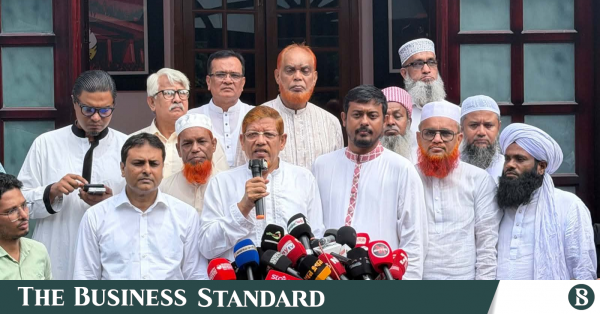
The announcement came after a preparatory meeting of the Liaison Committee of the 11-party alliance at the official residence of the opposition leader on Minto Road in the capital today (13 September).
The meeting was chaired by AHM Hamidur Rahman Azad, assistant secretary general of Bangladesh Jamaat-e-Islami, former MP and coordinator of the 11-party alliance.

The alliance has been organising a series of long marches demanding implementation of the referendum verdict, trial of the July Uprising, an end to shortages of electricity, oil, gas and fertiliser, control of rising prices of essential commodities, improvement of the law and order situation, and an end to corruption, extortion, land grabbing and excessive politicisation at all levels of the administration.
The Dhaka-Rangpur long march will begin from Manik Mia Avenue at 8am on 19 September, following a gathering at 7am and an inaugural rally that will continue until 8am. The participants will then leave for Rangpur.
At a briefing after the meeting, Hamidur Rahman said, “Our long march will continue. Our six-point demand has now become a seven-point demand, with ending corruption, land grabbing and extortion added to it.”
He alleged that these problems had now surpassed those seen during the previous “fascist” regime.
He said elected lawmakers of the 11 parties had taken an oath to the Constitutional Reform Council from the beginning and submitted notices in parliament demanding implementation of the referendum verdict.
“But on the first day, the government did not take the oath of the Constitutional Reform Council and ignored and rejected the verdict given by nearly 70% of voters in the referendum. This is a slap in the face of democracy and an insult to the popular mandate,” he said.
Hamidur Rahman alleged that the government had failed to resolve shortages of oil, gas and fertiliser. He said the opposition leader had proposed forming a task force to address the shortages, but the government did not consider the proposal.
Instead, he alleged, the government had increased oil prices citing an artificial crisis and failed to fulfil its election promises.
He also claimed that industries were shutting down one after another due to gas shortages and that the government had failed to take effective measures to address the situation.
“Whenever a crisis emerges, the government’s repeated failure to deal with it has become clear to the nation,” he said, adding that the government had been “running on a single track” for the past six months without taking alternative measures to address the crises, which he described as risky.
Hamidur Rahman also warned that the fertiliser shortage was disrupting agricultural production and could lead to a food crisis and further hardship for the people.
He alleged that the law and order situation was deteriorating, with killings, disappearances and abductions continuing, and opposition activists facing attacks.
“Five Jamaat activists have been killed,” he claimed.
He further said Bangladesh was facing an economic crisis and that national consensus was needed to address it.
“Since the government is not considering any proposal from the opposition to resolve the crises in parliament, the 11 parties have taken to the streets,” he said.
About The Author