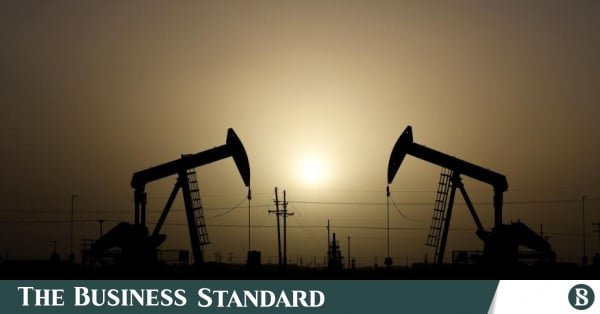
Its latest assessment released yesterday, Fitch said the country’s heavy dependence on the Middle East for both energy supplies and migrant workers leaves it particularly vulnerable to a prolonged conflict.
Representational image. Photo: Reuters
“>

Representational image. Photo: Reuters
A prolonged conflict in the Middle East could expose Bangladesh to new economic shocks, risking remittance inflows, pushing up energy import costs and worsening external balances, as the country remains ill-prepared to absorb sustained disruptions, Fitch Ratings said yesterday (29 October).
A $10-a-barrel rise in global oil prices alone could increase Bangladesh’s annual oil import bill by $1.2 billion, equivalent to around 0.2% of GDP, the global credit-rating agency estimates.
In its latest assessment released yesterday, Fitch said the country’s heavy dependence on the Middle East for both energy supplies and migrant workers leaves it particularly vulnerable to a prolonged conflict.

Remittances are a vital source of foreign currency for Bangladesh, and Gulf countries contributed nearly half of total remittance inflows in 2025-26.
Although remittances have held up well, we see a risk that in case of a prolonged conflict, they could decline on account of workers returning from the Middle East, Fitch said.
“Lower remittances could markedly weaken the external liquidity position,” it added.
Crude oil accounts for nearly 15% of the country’s total imports, exposing the economy to continued increases in global prices.
The risks extend beyond oil. Nearly 40% of the country’s electricity generation comes from LNG, while Qatar supplies nearly 70% of its LNG imports, leaving energy security vulnerable to prolonged disruptions.
Fitch said higher energy costs could widen external imbalances and weaken the taka and fuel inflation, while energy shortages could weigh on economic growth.
Inflation averaged 8.8% in the first nine months of 2026, while economic growth slowed to 2.2% in the first quarter before recovering to 4.6% year on year in the second quarter.
A prolonged period of high energy prices could also force the government to sustain subsidies for LNG and electricity, adding to fiscal pressures.
About The Author