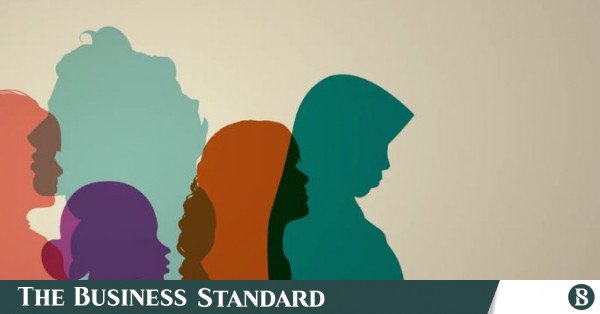
Women must be given greater space in political decision-making processes, not only recognised for their role as voters, experts and campaigners said at a dialogue marking International Women’s Day 2026.
ActionAid Bangladesh and Prothom Alo organised a discussion titled “Ensuring Women’s Leadership and Safety in Politics” at a hotel in Gulshan, Dhaka, today (5 March).
Participants noted that women remain significantly underrepresented in political leadership despite their strong participation as voters.

In the 2026 election, women accounted for only 3.93% of total candidates, while just seven women were elected directly.
The speakers said increasing women’s participation in politics requires not only party nominations but also meaningful inclusion in internal decision-making processes of political parties, alongside reforms to ensure transparency in elections and stronger social protection.
Rasheda K Choudhury, executive director of Campaign for Popular Education (CAMPE), said women play a crucial role in Bangladesh’s electoral process but are still not adequately recognised in positions of authority.
“Imagine what elections would look like if women did not vote. The election commission would even struggle to show the numbers,” she said, adding that although women are vital as voters, they have not been given the dignity they deserve in decision-making spaces.
She also noted that the spirit of independence was rooted in equality, justice and human dignity, but in practice women still lag behind in many areas.
The session was moderated by Farah Kabir, country director of ActionAid Bangladesh, who emphasised the need to create a dignified and supportive environment for women in politics.
Independent lawmaker Rumeen Farhana said, “The struggle to protect women’s presence in politics is as serious as challenging the so-called ‘obedient girl’ stereotype. Our political parties still harbour misogynistic attitudes. In the 2026 elections, one major party nominated no women, while another nominated only 3%. Even influential female leaders within parties sometimes dismiss this as a ‘male quota nomination.'”
She added, “Equality-conscious attitudes must begin within families. If a girl receives full support from her immediate family, she can stand tall with confidence. I urge the 52% of female voters to reject parties that fail to nominate women or give space to organic female politicians.”
Addressing the younger generation, Farhana said, “Women must develop the ability to make their own decisions. Only then can the existing political reality be truly changed.”
Independent candidate from Dhaka-8, Tasnim Jara, said discussions often focus on the number of female candidates, but rarely address women’s presence in actual decision-making roles.
She noted that although parliament has reserved seats for women, they are not elected through direct votes, and political parties often nominate women in constituencies where their chances of winning are low.
Jara also raised concerns about online gender-based harassment, saying such attacks against women leaders discourage other women from entering politics.
Nayab Yusuf Ahmed, MP from Faridpur-3, said women face numerous barriers in their political journey and often have to overcome significant obstacles to participate in elections.
He added that many women in rural areas remain deprived of basic rights, and at times religion is used to further marginalise them. Addressing these challenges requires working closely with women at the grassroots level, he said.
Speaking at the event, Matiur Rahman, editor of Prothom Alo, expressed optimism that women’s participation in elections will increase in the future.
He said various initiatives have been undertaken across the country over the past decades to boost women’s political participation, with ActionAid playing a leading role.
Around 50 female candidates from across the country who contested the recent election took part in the dialogue.
About The Author