While the government has taken short-term measures to manage the situation, structural and external pressures are making stability difficult to sustain.
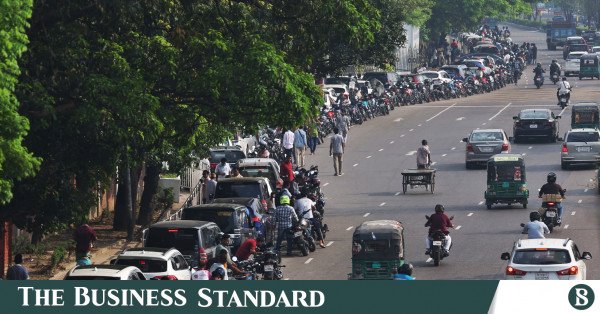
Motorcycles and cars wait in a long queue for fuel on the road in front of the Trust oil pump in Tejgaon. Photo Mehedi Hasan
“>

Motorcycles and cars wait in a long queue for fuel on the road in front of the Trust oil pump in Tejgaon. Photo Mehedi Hasan
Bangladesh is facing mounting challenges in maintaining a stable fuel supply as global energy disruptions linked to the Middle East conflict continue to strain imports, finances and reserves.
While the government has taken short-term measures to manage the situation, structural and external pressures are making stability difficult to sustain.

Key reasons behind the struggle
- Bangladesh remains heavily dependent on Middle Eastern oil and gas imports for its energy needs.
- Disruptions in shipments through the Strait of Hormuz have affected regular fuel supply routes.
- Major Gulf suppliers have declared force majeure and deferred scheduled fuel shipments.
- The country has been forced to rely more on costly fuel purchases from the spot market.
- Rising import costs, particularly for LNG cargoes, have increased overall energy expenditure.
- Spot market LNG purchases have added Tk4,500 crore to Petrobangla’s pre-war budget.
- Higher fuel import bills are putting significant pressure on foreign exchange reserves.
- A fragile fiscal position, driven by weak revenue growth, limits the government’s response capacity.
- Rising public debt has reduced financial flexibility in managing external shocks.
- The government is spending around Tk167 crore daily on fuel subsidies to ease public pressure.
- Domestic fuel prices have been kept unchanged, increasing the burden on public finances.
- Fuel reserves remain limited, prompting efforts to build a 90-day strategic stockpile.
- Global price volatility makes it difficult to plan long-term fuel procurement strategies.
- Bangladesh is turning to alternative and less familiar fuel sources amid supply uncertainty.
- Risks to remittance inflows from the Middle East add further strain to the overall economic situation.
About The Author