Beyond power generation, the study underscores the potential of industrial energy efficiency. It estimates that recovering waste heat in sectors such as ready-made garments, textiles and ceramics could yield up to 50 billion cubic feet of gas annually
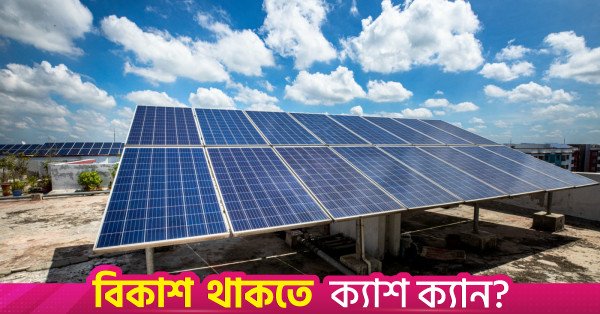
Representational image. Photo: TBS
“>

Representational image. Photo: TBS
Utility-scale solar power has become significantly more cost-effective than fossil fuel-based generation, according to a recent analysis.
A study by Lion City Advisory Research titled “Bangladesh Energy Sector: Crisis, Cost & Transition” found that recent competitive bids for solar projects stand at 8.27 US cents per kilowatt-hour (around Tk9.09).
This is substantially lower than the cost of heavy fuel oil and diesel-based power generation, which stand at Tk26 and Tk32.53 per kilowatt-hour respectively.

However, the report identifies policy uncertainty as a major barrier to renewable energy investment.
It highlights the cancellation of the Implementation Agreement (IA) framework as a key setback, arguing that reinstating it could unlock between $15 billion and $20 billion in private sector investment and revive more than 5,200MW of stalled solar projects.
Beyond power generation, the study underscores the potential of industrial energy efficiency. It estimates that recovering waste heat in sectors such as ready-made garments, textiles and ceramics could yield up to 50 billion cubic feet of gas annually.
Describing this as “free LNG,” the report says such efficiency gains could effectively match the output of 13 to 27 new gas wells without requiring additional fuel imports.
Looking ahead, Lion City Advisory proposes a long-term roadmap under a “Bangladesh Energy Independence Program (BEIP),” targeting a 60–70% share of renewables in the energy mix by 2040.
The strategy includes removing import duties on solar equipment, mandating solar installations in urban housing, replacing diesel-powered irrigation with solar alternatives, and expanding solar infrastructure nationwide.
The report also envisions Bangladesh becoming a net exporter of clean energy, potentially earning between $500 million and $1 billion annually by supplying surplus solar power to India’s northeastern states.
“The question is not whether Bangladesh can afford the energy transition,” the report states. “At $105 per barrel oil, Bangladesh demonstrably cannot afford not to transition. Every month of delay is costing the economy up to $800 million.”
About The Author