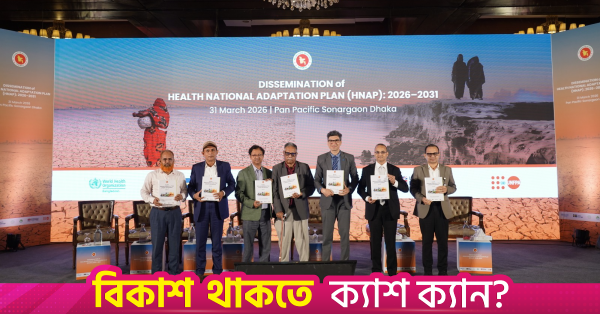
The United Nations Population Fund (UNFPA) has welcomed Bangladesh’s adoption of the Health National Adaptation Plan (HNAP) 2026–2031, describing it as a major step towards building a climate-resilient and sustainable health system.
The plan was formally launched today (31 March) at a national dissemination workshop in Dhaka, attended by government officials, development partners, UN agencies, academics and civil society representatives.
The HNAP outlines a strategic framework to address rising health risks linked to climate change, including extreme heat, floods, cyclones and shifting disease patterns. It aims to strengthen the country’s health system to ensure uninterrupted essential services and better protection for vulnerable communities.

UNFPA supported the Ministry of Health and Family Welfare in developing the plan, alongside partners such as the World Health Organization, the Institute of Epidemiology, Disease Control and Research (IEDCR), and the ministry’s Climate Change and Health Promotion Unit. The initiative also received support from the governments of the United Kingdom and Sweden.
Bangladesh remains highly vulnerable to climate change, with increasing exposure to extreme weather events and climate-sensitive diseases. Climate shocks can disrupt access to healthcare, particularly sexual and reproductive health services, while increasing maternal health risks and exposure to gender-based violence.
UNFPA Representative in Bangladesh Catherine Breen Kamkong said the adoption of the plan marks a “critical milestone,” noting that climate change disproportionately affects women and girls.
The HNAP aligns with Bangladesh’s broader National Adaptation Plan and global commitments, emphasising coordinated, multi-sectoral action to reduce climate-related health risks and strengthen preparedness and response systems.
Its effective implementation will be crucial to protecting the health and well-being of millions across the country, stakeholders said.
About The Author