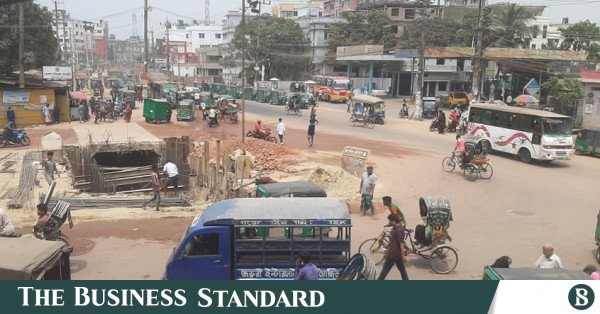
Passengers blamed a fuel crisis, while transport operators gave differing explanations
Photo: Shahadat Hossain Chowdhury/TBS
“>

Photo: Shahadat Hossain Chowdhury/TBS
Passengers in Chattogram reported sharp fare hikes and a shortage of vehicles, increasing hardship for commuters.
While many blamed a fuel crisis, transport stakeholders offered differing explanations.
In several upazilas, passengers said CNG-run auto-rickshaws and buses were charging higher fares, adding to the difficulties of people returning to work after the Eid-ul-Fitr holidays.

On the first day of reopening after Eid, students, parents, and workers faced difficulties due to a lack of transport.
A visit to Hamzar Bagh, 2 No Gate, Bahaddarhat, Muradpur, and Chawkbazar areas today (29 March) found many passengers waiting for vehicles.
Although transport services were operating, the number of vehicles was lower than usual. Passengers rushed to board as soon as vehicles arrived, though the pressure eased later in the day.
Safayet Hossain, a student of BGC Trust University Bangladesh, told TBS, “There are fewer vehicles compared to the number of passengers. It is difficult to get transport. I had to wait a long time myself.”
Passengers alleged that drivers were charging up to double the fixed fare, citing a fuel crisis. In many cases, fares were set arbitrarily, causing greater hardship for lower- and middle-income groups.
Local residents said similar conditions were seen in areas including Raozan, Hathazari, Anwara, Karnaphuli, Patiya, and Banshkhali, as well as within the city.
On Kaptai Road, passengers said fares from Pahartali to the Kaptai Road head, previously Tk30–40, had risen to Tk70–100.
A commuter travelling from Raozan to Notunpara Amtola said fares had increased from Tk20 to Tk40, adding that passengers were being forced to pay more due to a lack of alternatives.
In southern Chattogram, passengers reported similar fare hikes in CNG auto-rickshaws.
Fares from Karnaphuli to Anwara Chatori Chowmuhani rose from Tk100 to Tk200, while fares from Chatori Chowmuhani to Shah Amanat Bridge increased from Tk40 to Tk70–80.
Passengers said drivers were charging higher fares across the region, particularly for reserved trips, often one-and-a-half to double the usual rate.
They alleged that a lack of effective monitoring had led to the situation.
CNG drivers, however, said there was no gas shortage, but that they had to wait in long queues to refuel. As a result, they said they could not operate as frequently as before and were charging slightly higher fares.
Md Khorshed Alam, general secretary of the Chattogram-Rangamati Bus-Minibus Workers Union, told TBS, “There are enough vehicles on the roads. There is no shortage of fuel or vehicles. It may be due to higher passenger pressure at the start of the week. Fares are being collected as fixed.”
Mohammad Shahjahan, joint general secretary of the Bangladesh Road Transport Owners Association, said, “We are facing some difficulty in getting fuel, so the number of vehicles on the roads has decreased. Earlier, buses would operate even with fewer passengers, but now drivers have to think before running vehicles.”
“Bus and minibus operations on the roads have fallen by around 30% due to the impact of the fuel situation. However, fares remain unchanged, though some drivers may be charging more,” he added.
About The Author