Supermarket owners have urged the government to reduce the existing 1% minimum tax on gross receipts to 0.25%, saying the current rate is a major barrier to the expansion of the country’s modern retail sector.
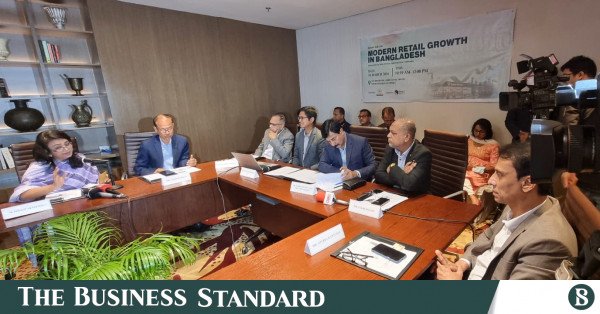
The demand was raised at a seminar titled “Modern Retail Growth in Bangladesh: Challenges, Solutions, and the Way Forward,” held at a hotel in the capital’s Banani yesterday (16 March).
In Bangladesh, a minimum tax is imposed on businesses based on their turnover or annual gross sales. Even if a company makes less profit than the tax paid, the excess amount is not refunded. Businesses are required to pay the tax even if they incur losses, with the rate currently ranging from 0.25% to 3% depending on the sector.

Business leaders have long criticised this system, arguing that taxation should be based on profit or income. They said the minimum tax forces loss-making or low-profit companies to pay taxes, resulting in capital erosion.
While presenting the keynote paper, Snehasish Barua, managing director of SMAC Advisory Limited, cited the supermarket sector as an example. He noted that the government increased the minimum tax for the sector from 0.60% to 1% in the FY2025-26 budget.
However, profit margins in the supermarket industry are very thin, he said, adding that the current system effectively pushes the tax burden on profits to around 68% on average.
Md Zakir Hossain, general secretary of the Bangladesh Supermarket Owners Association, said, “Excessive VAT and tax are among the main reasons behind the slower-than-expected expansion of supermarkets in the country.”
“If tax relief is provided, government revenue from this sector will increase,” he said.
Mutasim Billah Faruqui, a member of the income tax policy wing of the National Board of Revenue (NBR), stressed the need to move away from opaque business practices and a weak tax culture.
“We are considering whether the tax rate should be reduced, but there is pressure from various stakeholder groups,” he said.
“At the same time, many businesses do not pay their proper taxes, which creates distortions,” he added.
Former NBR member Apurba Kanti Das said the minimum tax system currently in place exists only in Bangladesh and Pakistan.
“Even though India has a similar provision, it is not implemented in the same way,” he noted.
Among others, Muallem Ahmed Choudhury, chief executive officer of Brummer and Partners Bangladesh Limited, Masud Khan, chairman of Unilever Consumer Care Limited, M Abu Yusuf, economist and professor at the University of Dhaka, and Doulot Akter Mala, president of the Economic Reporters Forum, also spoke at the event.
About The Author