Steps would be taken, in consultation with the Bangladesh government, to enable the vessels to cross the strait, he says
Illustration: Ashrafun Naher Ananna/TBS Creative
“>

Illustration: Ashrafun Naher Ananna/TBS Creative
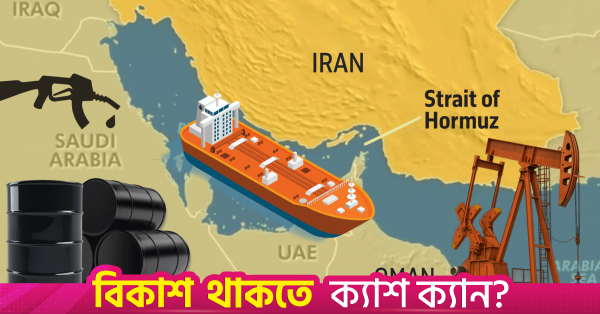
Some Bangladeshi ships stranded in the Strait of Hormuz amid the ongoing Middle East war will be able to cross soon, Iranian Ambassador to Bangladesh Jalil Rahimi Jahanabadi has said.
Iran will assist Bangladesh to arrange the release of the ships, he said while speaking as chief guest at a mourning gathering and anti-war crimes exhibition at Dhaka University today (12 April).
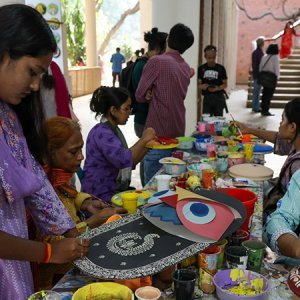
The exhibition, titled ‘Remembering the martyred students of the Islamic Republic of Iran: Demand for justice and accountability for US-Israeli war crimes’, was organised by Biplabi Chhatra Parishad (Revolutionary Students’ Council) at the historic Bot Tola on the Dhaka University campus.

The Iranian envoy said steps would be taken, in consultation with the Bangladesh government, to enable Bangladeshi vessels to cross the Strait of Hormuz.
He also spoke about Iran’s relations with Bangladesh, saying ties between the two countries are good.
Noting that Iran considers Bangladesh a brotherly country, he said Tehran has no hostility with Dhaka.
Referring to talks between Iran and the United States mediated by Pakistan, Ambassador Jahanabadi thanked Pakistan for facilitating ceasefire discussions. He also thanked Oman and others who supported the process.
Iranian Ambassador to Bangladesh Jalil Rahimi Jahanabadi attends a mourning gathering and anti-war crimes exhibition at Dhaka University on 12 April 2026. Photo: Courtesy
“>

Iranian Ambassador to Bangladesh Jalil Rahimi Jahanabadi attends a mourning gathering and anti-war crimes exhibition at Dhaka University on 12 April 2026. Photo: Courtesy
He said Iran has made clear it will only join talks if they are held on the basis of dignity.
He added that Iran would refrain from attacks during the agreed ceasefire period for talks.
However, if the US does not observe the ceasefire and continues attacks, Iran would be compelled to respond, he said.
Referring to the outcome of the Islamabad talks, Jahanabadi said Iran had engaged in discussions earlier but was attacked by the US during the process.
He alleged that Washington sought to portray itself as favouring peace while presenting Iran as favouring war.
The US never wants peace and has attacked Iran unjustly, he said.
He also said the US opposes Iran becoming a nuclear power, while allowing other countries.
The ambassador said US actions in Iran have not succeeded. He further said the United States had launched attacks to change Iran’s governing system.
He said US efforts had failed and it had not achieved its objectives. He also said the US wanted to control the Strait of Hormuz but failed there as well.
The ambassador thanked Biplabi Chhatra Parishad for organising programmes protesting US-Israeli attacks on educational institutions in Iran.
He alleged that the US had carried out attacks on hospitals, universities and schools in Iran and killed innocent civilians.
Iran does not want war, he said, adding that the US and Israel do not want the war to stop.
Special guest Khomenee Ehsan, convener of the National Revolutionary Council (Jatiya Biplabi Parishad), condemned US-Israeli actions in Iran.
He alleged that the US and Israel were responsible for the deaths of children in Iran. Bombing schools and killing children is a blow to global conscience, he said.
He said they were protesting such attacks and demanded an immediate end to the war.
The programme at Dhaka University featured symbolic coffins representing Iranian children killed in the attacks, blood-stained school bags and a photo exhibition.
Students from schools, colleges and universities placed handprints in red to show solidarity against US-Israeli actions and to support Iranian children.
Teachers, students and members of the public gathered at the Bot Tola area of Dhaka University in a show of solidarity.
Rows of small symbolic coffins, representing Iranian children killed in the attacks, were a key feature of the programme.
The display created a sombre atmosphere among those present.
Several parents at the gathering expressed concern over the deaths of children in the conflict.
They said no war should lead to the deaths of children and taking children’s lives for political interests cannot be accepted.
An anti-war signature campaign was held as part of the programme. Students and people from different walks of life signed to express their stance against war and violence.
Organisers said the signed memorandum would be sent to international human rights organisations.
The programme ended with prayers for the deceased children.
About The Author