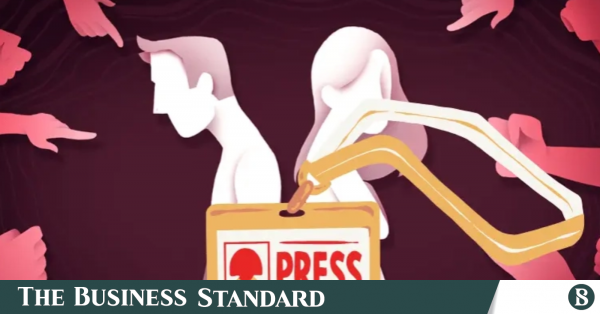
Speakers said institutional weaknesses remain a major challenge in preventing and addressing sexual harassment in media workplaces.
Representational image. Photo: Collected
“>

Representational image. Photo: Collected
A sexual harassment response protocol has been launched to ensure a safer working environment in Bangladesh’s media sector.
The protocol was developed by BBC Media Action Bangladesh and formally unveiled today (25 March) at a hotel in the capital.
It was prepared under a project supported by the Foreign, Commonwealth and Development Office, aimed at strengthening networks for women journalists.

Speakers at the event said institutional weaknesses remain a major challenge in preventing and addressing sexual harassment in media workplaces.
They stressed the need for strong commitment and accountability to ensure effective implementation.
President of the Newspaper Owners’ Association of Bangladesh, Matiur Rahman Chowdhury, said sexual harassment has become a social problem and urged media houses to ensure accountability through active discussions in newsrooms.
He also called for expanding such initiatives beyond the capital and noted that male journalists can also face harassment.
Academic Saiful Alam Chowdhury said the protocol is applicable across the system and suggested recognising gender-friendly media houses to encourage positive change.
Channel i’s Chief News Editor Mir Masrur Zaman Rony termed the protocol a milestone but said it must be integrated into HR policies, noting that victims often lose jobs while perpetrators remain unpunished.
President of the Overseas Correspondents Association Bangladesh, Nazrul Islam Mithu, said implementation gaps persist despite existing laws, and that such guidelines can help bring change through practice.
Communications Analyst at UN Women Bangladesh Shararat Islam said the protocol is simple and effective but stressed that implementation remains the key challenge.
Country Director of BBC Media Action Bangladesh Md Al Mamun said women make up less than 10% of journalists in Bangladesh, and a safe environment is essential to improve that balance.
The protocol includes a zero-tolerance policy, awareness measures, clear penalties, and the creation of support systems, said Arafat Siddiqi of BBC Media Action while presenting the keynote.
He also shared findings from a joint survey conducted in 2025 by BBC Media Action, WAN-IFRA Women in News, and City, St George’s University of London among 339 media workers.
The survey found 15% had faced sexual harassment at workplaces, while many reported verbal, online, and physical harassment.
Participants at the event expressed commitment to implementing the protocol across media organisations.
About The Author