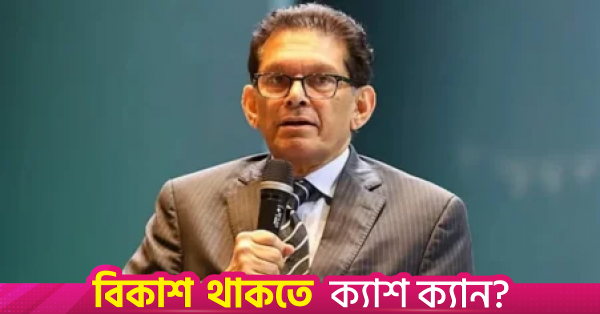
Zahed Ur Rahman attributes much of the current strain to illegal stockpiling and panic buying.
File photo of Dr Zahed Ur Rahman. Photo: Collected.
“>

File photo of Dr Zahed Ur Rahman. Photo: Collected.
Zahed Ur Rahman, the prime minister’s adviser on information and broadcasting, has acknowledged that Bangladesh is facing fuel supply-related challenges, warning that stricter measures may be imposed across sectors, including offices and markets, if the situation deteriorates further.
Addressing public concern over long queues at filling stations, he told a press briefing at the Secretariat today (7 April) that fears have emerged about whether fuel supply has dropped sharply.
However, data comparisons suggest the decline is not drastic, said Zahed, who also serves as PM’s adviser on policy and strategy and cultural affairs.

Diesel supply stood at 396,098 tonnes in March 2025, compared to 363,512 tonnes in March this year, he said. While this reflects a decline, he said it is not “significant.”
Octane supply, in fact, rose slightly – from 36,982 tonnes last March to 37,439 tonnes this year, he said, adding that petrol supply fell from 46,371 tonnes to 39,998 tonnes.
“This indicates there is some supply issue – limited, but not severe… The situation is not as dire as claims that there is no petrol or octane,” he said.
“I think it is not very unusual given the global situation.”
The adviser attributed much of the current strain to illegal stockpiling and panic buying.
He noted that some individuals may be hoarding fuel with the intent to sell at higher prices or smuggle it across borders.
Zahed said unusually high stockpiling in border areas could signal potential smuggling risks, particularly given lower fuel prices in Bangladesh compared to neighbouring countries.
At the same time, public anxiety is driving excessive purchases. “Many are buying more than needed out of fear of future shortages, which is essentially panic buying.”
Mentioning enforcement efforts, he said that as of 6 April morning, diesel stocks stood at 114,122 tonnes, octane 10,151 tonnes and petrol 13,805 tonnes.
The adviser also highlighted the heavy subsidy burden in the energy sector, noting that the government inherited liabilities exceeding Tk45,000 crore and continues to subsidise fuel to keep prices stable.
According to him, outstanding dues in the power sector include Tk20,272 crore to independent power producers, Tk2,904 crore to Adani Power, Tk6,434 crore in joint ventures, Tk10,045 crore to Petrobangla and Tk7,303 crore to state-owned power companies.
“Overall, subsidy pressure remains high. The government is trying to manage it while minimising the impact on the public, though some pressure will persist,” he said.
Responding to a question, he said that although many countries have raised fuel prices, Bangladesh will not do so for at least another month.
If the crisis worsens, tougher decisions may be taken across all sectors: offices, markets and beyond, Zahed said, stressing the need to clearly communicate any such decisions to the public.
About The Author