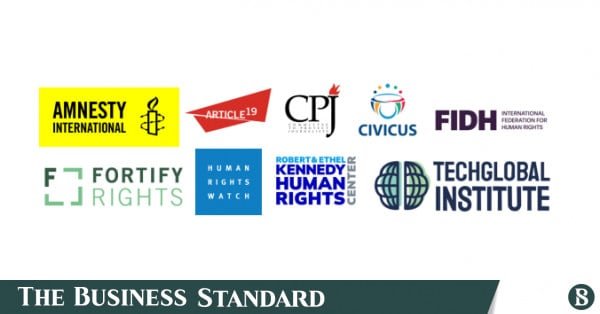
Nine international human rights organisations, including Human Rights Watch, have sent a letter to Prime Minister Tarique Rahman, urging the government to take decisive action on the pressing human rights challenges facing the country.
In the letter, the groups acknowledged Tarique’s mandate as a chance to move away from years of authoritarian practices and to create a government accountable to the people. The letter also mentioned that, while many of the severe human rights violations under the previous Hasina administration, such as enforced disappearances and extrajudicial killings, have formally ended, the interim government’s tenure still saw arbitrary detentions, attacks on journalists and media outlets, and threats to minority and religious communities.
Families of at least 287 missing persons remain without answers, illustrating the urgent need for thorough investigations, prosecutions, and preventative measures.

The letter also highlighted ongoing issues such as continued attacks and arrests of journalists, instances of mob violence, and the vulnerability of minority communities. It pointed out abuses by security forces, particularly in the Chittagong Hill Tracts, and the persistent restrictions on the rights and freedoms of women and girls in environments where religious groups seek to impose limitations.
The fate of Rohingya refugees was also raised, with over a million people living in crowded settlements in Cox’s Bazar and on Bhasan Char, facing limited access to education, livelihoods, and diminishing humanitarian support.
Human rights groups stressed that meaningful reform requires strong and independent institutions. They called for the establishment of a National Human Rights Commission capable of investigating abuses and preventing future violations, the review and amendment or repeal of laws and ordinances that do not meet international human rights standards, and the accountability of individuals responsible for past abuses.
These measures, they argue, are essential not only to uphold domestic rule of law but also to signal Bangladesh’s commitment to human rights on the global stage.
“Prime Minister Tarique Rahman has a mandate to deliver meaningful change, and this requires genuine reforms to strengthen institutions, safeguard freedoms, and uphold the rights of all citizens, including minorities and vulnerable communities,” said Meenakshi Ganguly, deputy director of Human Rights Watch Asia.
The letter concludes with an offer of collaboration, noting that although the list of recommendations may seem extensive, each step is critical to securing lasting human rights protections and creating a positive legacy for Bangladesh.
About The Author