When nine-year-old Arun entered the prayer room, he saw his elder brother lying on the floor. The room was flooded with blood from his brother’s chest. He realised immediately, his brother was no more.
He then looked at his sister-in-law. She was sitting against the wall, draped in a reddish sari with her head covered, hands resting on her lap. Her eyes were fixed on her husband, Ranjit. The vermilion mark on her forehead had faded.
Arun called out, but there was no response. She remained motionless. After repeated calls, when Arun shook her by the shoulder, she collapsed to the floor. Two blood-soaked hands emerged – her wrists adorned with traditional bangles, flesh torn in places.
This is the only memory Arun carries of his newly married brother and sister-in-law. The very next day, the family left for their ancestral home in Bikrampur, Munshiganj.

Arun’s full name is Arun Kumar Dey. In the early hours of 26 March 1971, Pakistani forces raided their home. His father was Madhusudan Dey – affectionately known as “Madhu Da” of Dhaka University’s Madhur Canteen.
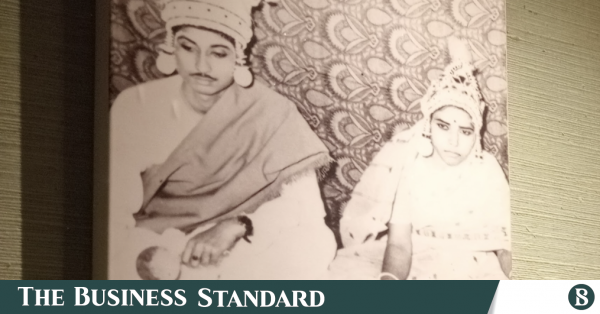
Despite the massacre across Dhaka on 25 March, Madhusudan Dey did not realise that his own home could be attacked. With everything shut down around them, the entire family was at home that night. Two daughters were at their in-laws’ houses, and the youngest daughter was visiting her aunt’s in-laws. At home were Madhusudan Dey, his wife Jogmaya, and their eight children. Their eldest son, Ranjit Dey, had been married just seven to eight months earlier.
From a young age, Ranjit had been brilliant. After completing a BCom from Jagannath College, he worked at an insurance company. He was also good at sports, especially badminton. Serious by nature, he was both feared and respected by his younger siblings.
“Dada was the eldest – like a guardian to us,” Arun recalled. “He always told us to study seriously. If we didn’t listen, he would discipline us. And we followed him.”
Rani’s mung dal was Arun’s favourite
Rani Dey, his sister-in-law, had a gentle nature – cheerful yet quiet and composed. She would affectionately call Arun her younger brother. In the mornings, after the men left for work and the children went to school, she would help her mother-in-law Jogmaya with household chores.
Arun still remembers her cooking. Her mung dal was his favourite, especially when prepared with fish head. On days she cooked it, he would eat to his heart’s content.
Sometimes he played Ludo with her. He would also sit and watch as his brother and sister-in-law played together.
Ranjit was also a talented singer. He mostly sang Rabindra Sangeet, Nazrul songs, and patriotic music.
“My sister-in-law also had a beautiful voice,” Arun said. “But as the eldest daughter-in-law of the house, she didn’t sing – though she loved listening to music.”
Bodies left to rot
Dhaka University had allotted Madhusudan Dey a residence in the staff quarters beside the Shiva temple. After marriage, Ranjit lived there with his wife.
Arun does not remember everything clearly. He recalls that upon entering the house, there was a veranda, with two rooms on either side. Next to his father’s room was the prayer room.
The Pakistan forces first surrounded the house, then knocked on the door of the upstairs room. Upon entering, they immediately tied up Madhusudan Dey, intending to take him away. At that moment, his pregnant wife Jogmaya stepped forward, raising her hands to save her husband. The soldiers slashed both her hands with bayonets.
Rani Dey was in the prayer room. As the soldiers entered and moved to attack her, Ranjit ran in from the adjacent room and asked her to raise her hands. At that very moment, he was shot in the chest.
Madhusudan Dey was then shot and taken, injured, to the field of Jagannath Hall, where he was tortured to death.
It remains unclear how Rani Dey was killed. Until Arun shook her, everyone believed she was still alive.
“Perhaps when the Pakistani soldiers approached, she became frightened and sat down, drawing her hands in,” Arun said. “Maybe that’s when she was shot.”
On that night of 26 March, Arun and his siblings were left numb with grief after witnessing the murder of their parents, elder brother, and sister-in-law before their eyes. The next day, with help from a friend of their father, they fled to their ancestral home in Bikrampur, Munshiganj, and later crossed into India.
The bodies of Madhusudan Dey, his wife, son, and daughter-in-law lay inside the house for several days. Eventually, municipal workers came and removed the decomposed bodies.
About The Author