“We are sharing data with DGHS to pinpoint hotspots and take measures quickly,” says Dr Asif Haider, DNCC Hospital spokesperson
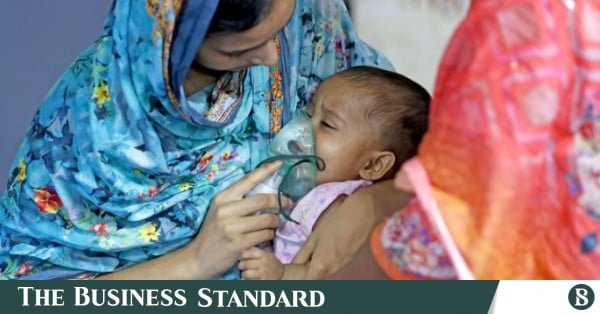
A woman nebulises a child undergoing treatment for measles at a hospital. Photo: TBS
“>

A woman nebulises a child undergoing treatment for measles at a hospital. Photo: TBS
A sharp rise in measles cases has put Dhaka’s slum children at severe risk, with hospitals struggling to cope with an influx of patients.
Wasena, a one-and-a-half-year-old resident of Korail slum, had suffered a persistent fever for seven days before being admitted to the DNCC Covid Dedicated Hospital in Mohakhali last Thursday.
Her mother, Munni Begum, told TBS, “She had a fever for five days, and even after taking paracetamol, it didn’t go down. Later, her eyes turned red, sores appeared in her mouth, and she couldn’t even drink water, prompting her admission to the hospital.”

Wasena had not yet received any dose of the measles vaccine. Her mother suspects she contracted measles while playing with other sick children in the neighborhood.
A similar situation has affected 14-month-old Raihan, who developed rashes and mouth sores after a post-Eid fever. He also missed his vaccination and has been receiving treatment in the hospital for nine days.
A visit to DNCC Covid Hospital yesterday revealed the facility is now admitting only patients with measles or measles-like symptoms. Patients are arriving from across the country, though the majority of Dhaka cases are from Korail slum. As of 8am yesterday, 277 children were admitted, including 44 in ICU.
In the previous 24 hours, 52 new children were admitted. So far, three children have died, while 75 have recovered and been discharged.
Doctors warn that slum conditions—overcrowding, malnutrition, and incomplete vaccination—make children particularly vulnerable.
Dr Asif Haider, DNCC Hospital spokesperson, told TBS, “Children in slums often suffer from malnutrition and worms. When combined with missed vaccinations, the risk of measles rises sharply. Patients are coming from all over the country, and we are sending data to DGHS to identify hotspots and implement quick measures.”

The Directorate General of Health Services (DGHS) reported the highest single-day hospital admissions for measles and suspected cases yesterday. In the past 24 hours, 1,462 patients—confirmed and suspected—were admitted nationwide, with seven child deaths, with two confirmed and five suspected measles.
According to DGHS, 20 children have died from confirmed measles infections so far this year, while 118 children have died with suspected measles symptoms. Between 15 March and 6 April, a total of 1,099 measles cases have been laboratory confirmed. Nationwide, 8,534 suspected measles cases have been identified, with 6,016 already discharged.
Proper nutrition, vaccination critical
Although measles cases are rising in the country, not all children face the same risk. Public health experts emphasise that children who are malnourished or have weak immunity are most at risk of severe measles complications.
Dr M Mushtuq Husain told TBS, “While measles can infect nearly all children, severe complications mainly occur in those already suffering from malnutrition, diarrhea, or respiratory infections. Poor children often lack nutritious food, vitamin A, and sufficient breast milk, weakening their immunity and making measles potentially fatal.”
In contrast, children from wealthier families can access treatment at home or in private hospitals, reducing their risk of severe outcomes, he added.
Dr Sanjoy Kumer Dey, Professor of Neonatology at Bangladesh Medical University, urged parents to be vigilant: “Measles is extremely contagious; one patient can infect at least 18 others. Any child with fever, cough, or red eyes should see a doctor immediately. Proper nutrition and vaccination are critical.”
Experts stress urgent measures to control the outbreak in slums, including decentralised healthcare services, contact tracing, early diagnosis, isolation, and financial support for affected families to ensure treatment and containment.
About The Author