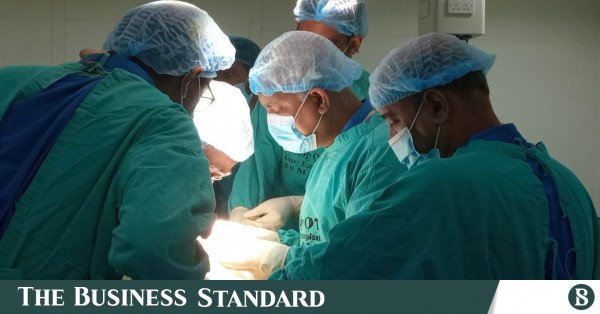
World Kidney Day today
Infograph: TBS
“>

Infograph: TBS
Even without blood ties, anyone with a compassionate bond can donate a kidney as an “emotional donor,” but four months after the ordinance allowing this, no such transplants have occurred thanks to low awareness and widespread fears of unethical practices.
Some applications from potential emotional donors are still awaiting verification and approval. However, many hospitals remain reluctant to accept such donors due to the complexity of the approval process.
On 19 November last year, the Human Organ Transplant Ordinance 2025 was published in the form of a gazette notification.
Under the previous law, 22 close relatives could donate a kidney.

The new ordinance increases the number to 30, including cousins, nephews and nieces, and step-siblings.
Experts say low awareness and limited promotion leave many unaware of emotional donation. They also cite the process’s complexity and potential risks of unethical or illegal practices.
Emotional donation faces hurdles
In addition to these close relatives, the ordinance allows “emotional donors” to donate organs.
To qualify, a donor must be over 18, mentally healthy, and provide informed, voluntary consent.
There must be no financial inducement or coercion.
The donor and recipient must share a long-term acquaintance, and the donor must be approved by the committee concerned as a selfless donor.
A committee has already been formed to determine and approve emotional donors.
Individuals with drug addiction, intent for financial gain, or health conditions that make donation unsuitable cannot become emotional donors.
Professor Dr Md Mujibur Rahman Hawlader, pro-vice chancellor and convenor of the Emotional Donor Committee, said many people are collecting application forms for emotional kidney donation.
Several applications with necessary documents have been submitted and are awaiting verification and approval.
“We have a plan to automate the process for nationwide online submission,” he said.
Hospitals cautious amid risk of unethical practices
However, Professor Dr Harun Ur Rashid, founder of the Kidney Foundation Hospital and Research Institute, warned that the process is complicated.
“At our hospital, we perform two kidney transplants per week after DNA testing of close relatives, but we do not accept emotional donors,” he said.
“Unethical practices could occur—for example, someone arranging a donor with a payment of Tk500,000—which could make the process controversial. This could lead to illegal transplants, as seen in India and Pakistan, putting patients at risk,” he added.
Doctors highlight the urgent need for awareness about cadaveric transplants and expanding kidney transplant centers across the country.
In Bangladesh, around 3.80 crore people suffer from kidney diseases, and 30,000 to 40,000 patients’ kidneys fail each year. Nearly 80% of new patients die due to lack of treatment.
About 400 kidney transplants are performed annually at four institutions: Bangladesh Medical University, Kidney Foundation, Centre for Kidney Disease and Urology (CKDU) Hospital, and Kidney Foundation.
Professor Dr Md Nazrul Islam, convener of the Bangladesh Renal Association, emphasised that public awareness is key to combating the silent killer. He advised avoiding adulterated food, maintaining a healthy weight, and controlling blood pressure and diabetes.
World Kidney Day today (12 Mrach), with this year’s theme focusing on “Kidney Health for All – Caring for People, Protecting the Planet.”
About The Author